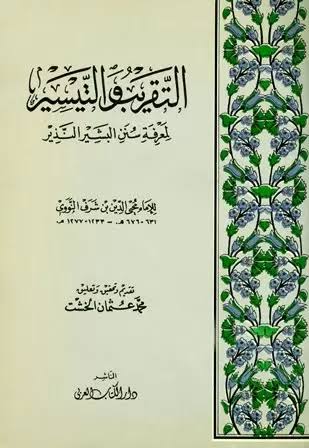
About
A compact manual by Al‑Nawawī that distils Ibn Ṣalāḥ’s principles of ḥadīth science, presenting the core terminology and classification rules to help students quickly grasp the methodology for authenticating and understanding prophetic traditions.
Table of contents
The First Type: Authentic
The Second Type: Hasan
The Third Type: The Weak
The Fourth Type: Musnad
The Fifth Type: Mutasil
The Sixth Type: The Marfū‘
The Seventh Type: The Mauqūf
The Eighth Type: Al‐Maqṭūʿ
The Ninth Category: Mursal
The Tenth Type: Al-Munqati‘
Category Eleven: The Difficult Case
The Twelfth Type: Tadlees
The Thirteenth Type: The Anomalous
The Fourteenth Type: Knowledge of the Reprehensible
The Fifteenth Category: Knowledge of Considerations, Sequences, and Evidences
The Sixteenth Section: Knowledge of the Additions of the Trustworthy Narrators and Their Ruling
The Seventeenth Category: Knowledge of Divine Oneness
The Eighteenth Type: Al‐Mu‘allal
The Nineteenth Type: The Disturbed
The Twentieth Type: The Ladder
The Twenty-First Type: The Subject
The Twenty-Second Category: The Inverted
The Twenty-Third Category: The Description of One Whose Narration Is Accepted and Related Matters
The Twenty-Fourth Section: How to Hear Hadith, Transmit It, and Ensure Its Accurate Preservation
The Twenty-Fifth Category: Writing Hadith and Ensuring Its Precision
The Twenty-Sixth Category: The Description of Hadith Narration
The Twenty-Seventh Category: Knowledge of the Etiquettes of the Hadith Scholar
Category Twenty-Eight: Knowledge of the Etiquette of the Hadith Student
The Twenty-Ninth Category: Knowledge of the Ascending and Descending Chains of Transmission
The Thirtieth Category: The Well-Known Hadith
The Thirty-First Category: Al-Gharib and Al-Aziz
The Thirty-Second Type: Gharib al-Hadith
The Thirty-third Type: Musalsal
The Thirty-Fourth Category: The Abrogating and the Abrogated Hadith
Section Thirty-Five: Knowledge of the Mushaf
Section Thirty-Six: Knowledge of the Different Ḥadīth and Its Ruling
Category Thirty-Seven: Further Knowledge of Connected Chains of Transmission
Type Thirty-eight: Mursal Narrations with Hidden Transmission
The Thirty-Ninth Section: Knowledge of the Companions (may Allah be pleased with them)
Section Forty: Knowledge of the Tabi‘īn, may Allah be pleased with them
The Forty-First Category: Narration of Senior Narrators from Junior Narrators
The Forty-second Category: al-Mudabbaj – The Narration of the Qarin
The Forty-third Type: Knowledge of the Brothers
The Forty-Fourth Type: Fathers’ Narration from Their Sons
The Forty-Fifth Category: Narration of the Sons from Their Fathers
The Forty-Sixth Type: Those for whom two narrators participated in the transmission, but their deaths were widely separated.
The Forty-Seventh Category: Those from Whom Only One Narrator Reported
The Forty-Eighth Category: Identification of One Mentioned by Various Names or Attributes
The Forty-Ninth Category: Knowledge of Terms
The Fiftieth Section: On Names and Kunyas
The Fifty-First Section: Identifying the Kunyas of Known Persons by Their Names
The Fifty-Second Category: Titles
The Fifty-Third Type: The Similar and the Different
The Fifty-Fourth Type: Agreement and Disagreement
The Fifty-Fifth Category: The Allegorical
The Fifty-Sixth Category: Similar in Name and Lineage, Distinguished by Precedence and Postponement
The Fifty-Seventh Section: On Identifying Those Ascribed to Someone Other Than Their Fathers
The Fifty-Eighth Type: Lineages Contrary to Their Apparent Meaning
The Fifty-Ninth Category: The Ambiguous Matters
Type Sixty: Histories and Obituaries
The Sixty-First Section: Identifying the Trustworthy and the Weak
The Sixty-Second Category: Those Mixed Among the Trustworthy
The Sixty-Third Genre: The Classes of Scholars and Narrators
The Sixty-Fourth Category: Knowledge of the Mawali
The Sixty-Fifth Genre: Knowledge of the Narrators’ Homelands and Towns