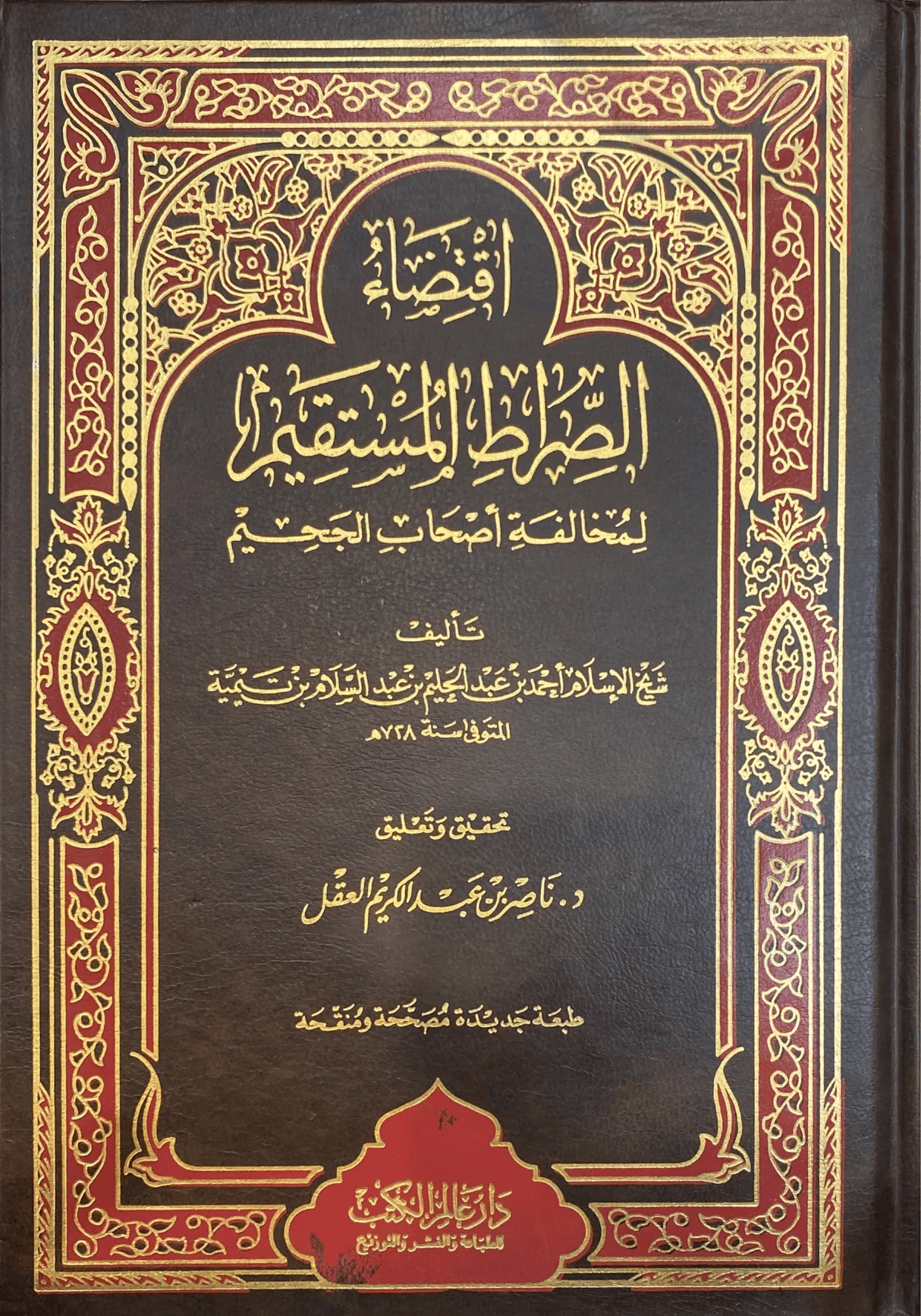
Iqtiḍāʾ al-Ṣirāṭ al-Mustaqīm
The necessity of the straight path to differ from the people of hell
Ibn Taimiyaاقتضاء الصراط المستقيم لمخالفة أصحاب الجحيم — ابن تيمية
951 pages
About
A polemical-legal treatise by Ibn Taymiyya arguing that Muslims must maintain a distinct religious identity by avoiding imitation of non-Muslim practices in worship, dress, festivals, and social customs, substantiated with Qurʾān, Sunnah, and early scholarly consensus.
Table of contents
Preface by His Excellency Dr. Abdullah bin Abdul Mohsen Al-Turki, Minister.
Introduction
Section One: The Study
A Brief Biography of the Author
Description of the Book’s Manuscript Copies
The Investigated Book: Its Name and Date of Composition
Methodology for Verifying and Commenting on the Book
An Analytical Study of Some Topics of the Book
First, the main topic of the book
Secondly: A Study of Some Topics of the Book
The First Topic: The Author’s Note on Two Important Principles
Topic Two: Some Types of Innovations and Polytheistic Practices Afflicting the Ummah
Topic Three: The Impact of Imitation on the Ummah
The Fourth Topic: Fundamental Rules of Imitation
The Fifth Topic: Categories of People Whom We Are Forbidden to Resemble
Topic Six: The Prohibition Encompasses All Characteristics of Disbelievers, Past and Present
Topic Seven: When Is It Permissible to Imitate Non-Muslims
Topic Eight: On Innovative Festivals and Celebrations
The Ninth Chapter on Idle Talk
The Tenth Topic on the Concept of Bidʿah
Topic Eleven: On the Innovations of Graves, Shrines, Sacred Sites, Relics, and the Like
Section Two: The Book Authenticated with Commentary
The Khutbat al-Hajah from the Book of al-Muhaqqiq
The Reason for Authoring the Book
Chapter on the State of People Before Islam
Some Matters of the People of the Book and the Non-Arabs by Which Some Muslims Have Been Tested
The Command to Differ from Those upon Whom Divine Wrath Has Fallen and Those Who Are Astray in the Manifest Guidance
Chapter on the Evidences for the Command to Differ from the Disbelievers Generally and from Their Festivals Specifically
Exposition of the Benefit in Differing from the Disbelievers and the Harm and Corruption of Following Them
Qur'anic Evidence for the Prohibition of Following the Disbelievers
Evidence from the Sunnah on the Prohibition of Following the Disbelievers
The Discord Foretold by the Prophet (peace be upon him)
The Types of Disagreement
Return to the Qur'anic Evidence for the Prohibition of Imitating the Disbelievers
The Prohibition of Loyalty to and Love for the Disbelievers
The Aspects of the Command to Differ from the Disbelievers
Condemnation of Some Characteristics of al-Jahiliyyah
Corruption and Its Types
Imitation: Its Concept and Implications
Rigorous Self-Discipline: Its Types and Effects
Chapter on the Benefits of His Great Sermon on the Day of Arafah, Peace and Blessings Be Upon Him and His Family
Chapter on the Consensus Regarding the Command to Differ from the Disbelievers and the Prohibition of Resembling Them
The First of the Proofs of Consensus
The Second Aspect of the Proofs of Consensus
The Third Aspect in Establishing Consensus
Section on the Command to Oppose the Devils
Chapter on the difference between imitating the disbelievers and the devils, and imitating the Arabs and the non-Arabs
People are divided into the righteous, the wicked, the believers, and the disbelievers, and lineage is of no significance.
The Preferential Distinction Between the Arab and Non-Arab Peoples
The Prohibition of Hatred of the Arabs
The Reasons for the Superiority of the Arabs
Section: That what was legislated by those before us is legislated for us so long as our own legislation does not contradict it
Chapter on the Categories of the Disbelievers’ Deeds
Chapter on the Festivals
Methods for Proving the Impermissibility of Conforming with Them in Their Festivals
The first approach is that it concurs with the People of the Book in matters not found in our religion.
The Second Path: The Book, the Sunnah, Consensus, and Reflection
The Second Path: The Book, the Sunnah, Consensus, and Reflection
Chapter on Their Similarity in Matters Not Part of Our Sharia
Section on the Concept of Eid and the Caution Against Imitating the Disbelievers in Their Festivals
Chapter on the Festivals of the Non-Muslims
Some of the Innovations That Muslims Practice in That
The Prohibition of Assisting Disbelievers in Their Festivals
Sale of a House and Similar Property to a Dhimmī and Its Lease to Him
The Dhimmi’s Purchase of Ushr Land from a Muslim
Leasing the land endowed to the church and purchasing what is sold to the church
Acceptance of Gifts from the Ahl al-Dhimma on Their Feast Day
Their Sacrificial Offering on Their Feast Day and the Types of the People of the Book’s Sacrifices
What Is Slaughtered on the Altars
The Sacrifices of the Harassing Jinn
Return to the Detailed Discussion Concerning What Is Slaughtered at Altars
Chapter on Fasting on the Days of the Disbelievers' Festival
Chapter on the Fast of Nowruz, the Mahrajan, and Similar Festivals of the Polytheists
Chapter on All the Other Newly-Innovated Festivals and Occasions
Any innovation introduced among the seasons and festivals is blameworthy in two respects.
The First: The Inclusion of All Newly Devised Festivals and Seasons under the Designation of Newly Introduced Innovations
Second: Its Inclusion of Corruption in the Religion
Section on the Newly-Innovated Temporal Festivals
The Types of Newly Introduced Temporal Festivals
Chapter on the Newly Invented Local Festivals
Chapter on the Types of Location-Based Festivals
The first category: a place with no specific ruling in the Shariah.
Some of the Places and Graves that People Have Innovated
Section on the Second Type of Places
The second type is that which lacks any special characteristic requiring it to be designated as an Eid.
Applying 'Eid' to the Gathering Place
The Book of Matters Pertaining to Graves: Visiting Them, Praying at Them, Making Them Mosques, and Building upon Them
Types of Prohibitions
Supplication at the Graves
Refutation of the Claim That the Ummah Has Unanimously Approved of Supplicating at Graves
The Practice of Worship and Supplication at Graves Is Not Evidence of Its Approval
Types of Shirk
Supplication after the Salutation to the Prophet ﷺ at the Grave
Refutation of the Reports Regarding the Recommendation of Supplication at the Grave
Some Innovations Concerning Graves
Chapter on the Prohibition of All Other Acts of Worship at Graves
A Chapter on Staying at Graves, Residing Near Them, and Sealing Them
Chapter on the Stations of the Prophets and the Ruling Concerning Seeking Them
Scholars’ Opinions, Clarification of the Correct View, and Its Evidences
The Places the Prophet ﷺ Would Go to Pray or Supplicate
The Seeking of Rain from the Living People of Goodness Is Only by Their Supplication
Seeking Nearness to God through Righteous Deeds
Tawassul with the prophets and the righteous is by obeying and following them, or by their supplications and intercession.
The Mosques to Which Journeys Are Undertaken
Chapter on Al-Masjid al-Aqsa
Chapter on the Non-Exclusive Designation of a Place for Worship Except Mosques
People’s Opinions on Intercession and the Correct Statement Concerning It
The Foundation of Monotheism with Which the Messengers Were Sent and the Books Were Revealed
The fundamental religion of the Prophets is one; only the laws have varied.
Errors of Sects in the Definition of Tawḥīd and Clarification of the Truth
The Conclusion