Ibn Abd al-Barr
ابن عبد البر
About the author
Full name: Abu 'Umar Yusuf ibn 'Abd Allah ibn Muhammad ibn 'Abd al-Barr an-Namari al-Andalusi al-Qurtubi al-Maliki.
Birth and death: He was born in Cordoba in 368 H (978). He died on 2 December 1071 (463 H) in Shatiba (Jativa, in present-day Spain), at the age of 93, may Allah have mercy on him. Ninety-three years of a life devoted to knowledge — what a blessed life!
His place in the Ummah: Imam adh-Dhahabi wrote in his Siyar A'lam an-Nubala': "Ibn 'Abd al-Barr had no equal in the western part of the Islamic lands in the science of hadith. He was pious and trustworthy in knowledge, and a Hafiz." He gave him the title Hafiz al-Maghrib (the Hafiz of the Muslim West). He is also referred to as the "Bukhari of the West", due to his unmatched mastery of hadith in the western part of the Muslim world.
Adh-Dhahabi described him in the Siyar as "a great imam, master of hadith, and critic."
His origins: According to Ibn Khallikan, Ibn 'Abd al-Barr belonged to the Arab tribe of Namar ibn Qasit. He grew up in Cordoba, then the most brilliant center of Islamic learning in the entire Muslim West, where he studied under renowned scholars.
His education: He studied fiqh, hadith, the Arabic language, genealogy, and history under the greatest scholars of Cordoba. He corresponded with eminent scholars of the Muslim East — whom he never visited — and traveled throughout his native land of al-Andalus in search of knowledge. Although he initially adhered to the Zahiri school, Ibn 'Abd al-Barr later moved to the Maliki school, which was the official school of the Umayyad dynasty of al-Andalus. His transition from Zahirism to Malikism reflects the depth of his research and his thirst for truth.
His madhhab: He represented the traditionalist (Athari) current of the Maliki school. His methodology in fiqh was grounded in the texts of the Quran and the Sunna, the opinions of the Companions, and the positions of the early imams, with deep respect for Imam Malik but without blind taqlid.
His 'aqida: He followed the Athari path in matters of 'aqida — the path of the Salaf as-Salih. In his Tamhid, he affirmed the transcendence of Allah (al-'uluw), His istiwa' upon the Throne, and refuted the Mu'tazila and the Jahmiyya who denied these Attributes. He stated that texts concerning the Attributes must be taken at their apparent meaning (haqiqa) as long as the Ummah has not unanimously agreed on a metaphorical sense. This position placed him among the defenders of the 'aqida of the Salaf in the Muslim West, which is remarkable in a milieu where Ash'arism was dominant.
His positions: He held prestigious judicial posts, including that of Qadi of Lisbon and Santarem under the Aftasid ruler al-Muzaffar ibn al-Aftas. He later returned to al-Andalus and settled in Shatiba (Jativa), where he devoted himself to writing and teaching until the end of his life.
His students: Among his most illustrious students were Imam Ibn Hazm (may Allah have mercy on him) — the great Zahirite of al-Andalus — and Abu 'Abd Allah al-Humaydi (may Allah have mercy on him), author of the Jadhwat al-Muqtabis.
His works: Imam adh-Dhahabi ranked his Tamhid among the three books that impressed him the most, alongside the Sunan al-Kubra of al-Bayhaqi and the Muhalla of Ibn Hazm. Among his most famous works:
At-Tamhid lima fi al-Muwatta' min al-Ma'ani wa al-Asanid — His monumental masterpiece. It is a commentary on the Muwatta' of Imam Malik, organized according to the names of Malik's sheikhs (teachers) in the Muwatta'. He treats the chains of transmission, the meanings of the hadiths, questions of fiqh, 'aqida, and critique of transmitters, with encyclopedic erudition.
Al-Istidhkar li Madhhab 'Ulama' al-Amsar fima Tadammanahu al-Muwatta' min Ma'ani ar-Ra'y wa al-Athar — His second great commentary on the Muwatta'. It is characterized by its exhaustiveness in explaining the hadiths of the Muwatta', treating both connected and disconnected chains, clarifying the opinion of Imam Malik and what was built upon it, in addition to mentioning the opinions of the jurists of other regions. Al-Istidhkar is considered one of the most important books in the explanation of the Muwatta', and scholars such as adh-Dhahabi and Ibn Kathir praised it.
Jami' Bayan al-'Ilm wa Fadlih (The Compendium Expounding the Nature of Knowledge and Its Immense Merit) — A foundational work on the value of knowledge, the rules of its transmission, the methods of the scholars, and the ethics of the scholar and the student. This book is a treasure for every student of knowledge and contains essential positions on taqlid, ijtihad, and methodology.
Al-Isti'ab fi Ma'rifat al-Ashab — A comprehensive encyclopedia of the Companions of the Prophet (peace and blessings be upon him), containing their biographies, their virtues, and the hadiths that mention them. Ibn Hajar al-'Asqalani relied upon it to compose his Isaba.
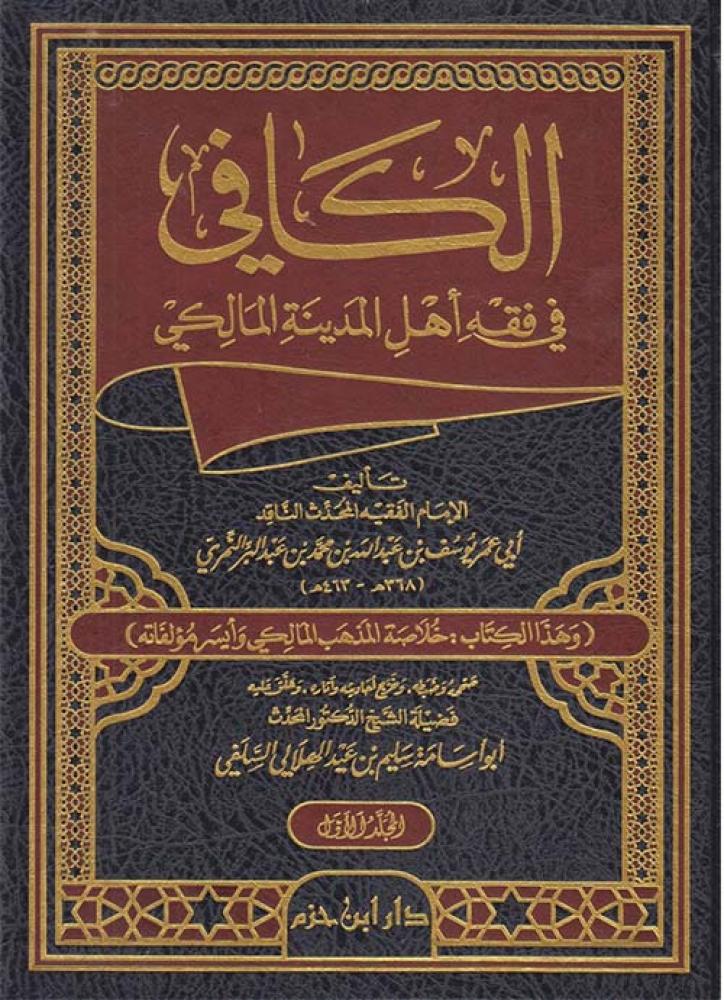
Al-Kafi fi Fiqh Ahl al-Madina al-Maliki — A work of Maliki fiqh based on the school of the People of Medina.
Al-Intiqa' fi Fada'il al-A'imma ath-Thalatha al-Fuqaha' — A work on the virtues of the three great jurists: Malik, ash-Shafi'i, and Abu Hanifa.
Ad-Durar fi Ikhtisar al-Maghazi wa as-Siyar — A summary of the prophetic biography.
And many other works of hadith, fiqh, genealogy, and history.
His death: He died in 463 H in Shatiba (Jativa). The Muslim Ummah lost in the year 463 H two of its greatest scholars — Ibn 'Abd al-Barr and al-Bayhaqi died in the same year, may Allah have mercy on them both.
His legacy: Imam Ibn 'Abd al-Barr (may Allah have mercy on him) is the Hafiz of the West, the Bukhari of the Maghreb, and one of the greatest Maliki scholars of all time. His two commentaries on the Muwatta' — the Tamhid and the Istidhkar — are unparalleled works in hadith literature. His Jami' Bayan al-'Ilm is a timeless guide for every student of knowledge. And his firm stance on the 'aqida of the Salaf in a milieu dominated by kalam makes him a model for anyone who wishes to combine Maliki fiqh with Athari 'aqida. May Allah let us benefit from his knowledge and gather us with him in Firdaws al-A'la.