Al-Buhuti
البهوتي
About the author
Full name: Abu as-Sa'adat Mansur ibn Yunus ibn Salah ad-Din ibn Hasan ibn Ahmad ibn 'Ali ibn Idris al-Buhuti al-Hanbali al-Misri al-Qahiri.
Birth and death: He was born in Buhut, in Egypt, around 1000 H (1591). He died on Friday, 10 Rabi' ath-Thani 1051 H (July 1641) in Cairo, after falling ill five days earlier. He lived approximately 51 years, may Allah have mercy on him.
His place in the Umma: He is widely considered the last verifier and commentator (Khatimat al-Muhaqqiqin) of the Hanbali madhhab. This title — "the Seal of the Verifiers" — means that his works constitute the last authorized synthesis of Hanbali fiqh in its classical formulation. His legal writings are considered well-documented and concise, and are still studied and highly respected in Hanbali circles in Saudi Arabia, Syria, Qatar, Kuwait, and Egypt.
People traveled to him from different horizons to learn the madhhab of Imam Ahmad. The Hanbalis of the lands of Sham, the regions of Najd, and the lands of Palestine and Ba'labakk traveled to him. He was also devoted to much worship and was a person of great benefit to others.
His origins: The name "al-Buhuti" is an attribution to the village of Buhut in Egypt. It is remarkable to note that a Hanbali scholar of such rank was born and lived in Egypt, a country where the Hanafi madhhab (under the Ottomans) and the Shafi'i madhhab dominated. This shows that Hanbali fiqh was very much alive in Egypt, with a continuous presence within al-Azhar University and in the scholarly circles of Cairo.
His education: Among his teachers were Sheikh and Imam Yahya ibn Musa ibn Ahmad, known as Ibn al-Hajjawi al-Maqdisi — a descendant of the illustrious al-Hajjawi, the author of al-Iqna' and Zad al-Mustaqni'; Sheikh Muhammad ibn Ahmad al-Mardawi al-Hanbali, Sheikh of the Hanbalis of his time (d. 1026 H), from whom al-Buhuti took the major part of his scholarship; and other scholars such as ash-Shihab Ahmad al-Warithi as-Siddiqi and an-Nur 'Ali al-Halabi.
His character: He was of an elevated character, good and generous toward people, visiting the sick and taking care of them. People entrusted their alms to him and he distributed them to the students.
His works: The works of al-Buhuti are the backbone of the teaching of Hanbali fiqh in the Muslim world, from the beginner level to the advanced:
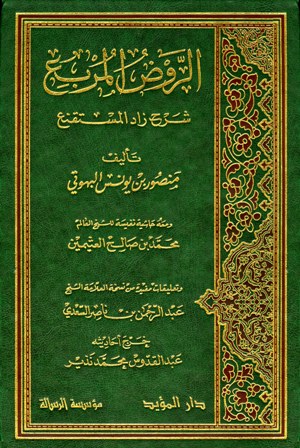
Ar-Rawd al-Murbi' Sharh Zad al-Mustaqni' — His commentary on the Zad al-Mustaqni' of al-Hajjawi (may Allah have mercy on him), which is itself a summary of Ibn Qudama's Muqni'. His style of explanation is unique: he usually combines his own words with the original text, so that the final result reads as a single fluid book. This method simplifies and resolves any complex or ambiguous phrase used by the original author. In the Rawd, al-Buhuti did not limit himself to the topics mentioned by al-Hajjawi; he added many detailed questions — all concisely. This book is the most studied commentary on the Zad al-Mustaqni' and is mandatory in all universities of Shari'a in Saudi Arabia. It is upon this Rawd al-Murbi' that Sheikh Ibn al-'Uthaymin composed his famous Sharh al-Mumti', and Sheikh 'Abd ar-Rahman ibn Qasim his Hashiya in seven volumes.
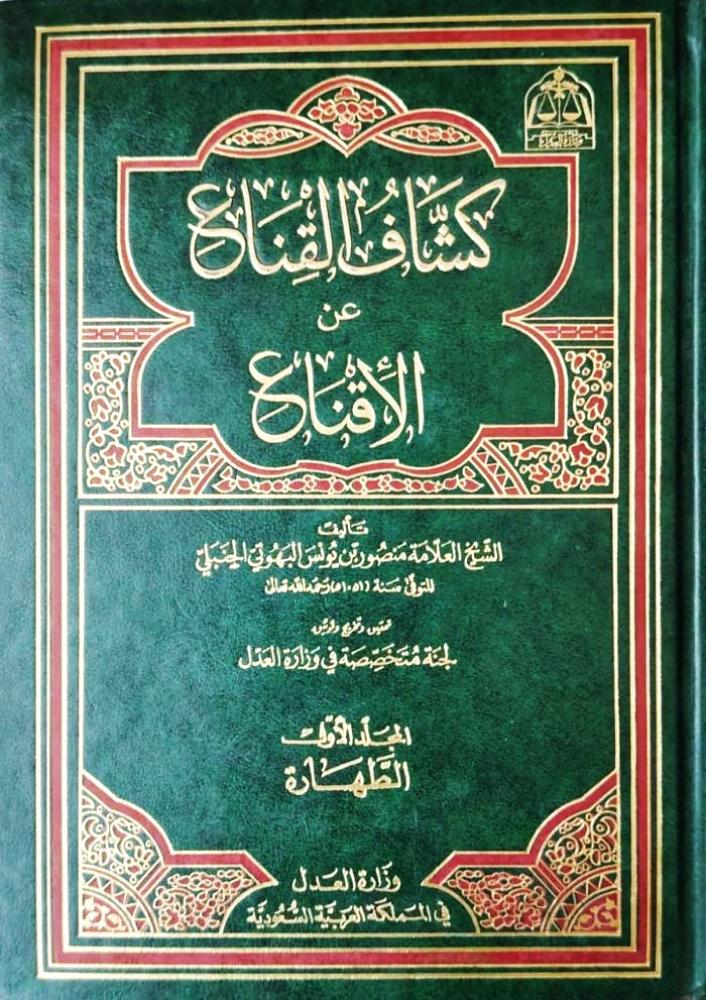
Kashshaf al-Qina' 'an Matn al-Iqna' — A voluminous commentary on al-Hajjawi's Iqna', which is the advanced reference text of the Hanbali madhhab. This encyclopedic work in several volumes is considered the ultimate reference for the fatwa in the Hanbali madhhab. He treats therein with extreme rigor questions of ritual purity, worship, transactions, and personal law, resolving interpretive ambiguities and ranking the proofs.
Sharh Muntaha al-Iradat (also called Irshad Uli an-Nuha li Daqa'iq al-Muntaha) — The reference commentary on the reference text of the madhhab of Imam Ahmad, the Muntaha al-Iradat of Ibn an-Najjar al-Futuhi (d. 972 H). It is a work of advanced fiqh that supplements the Kashshaf al-Qina' and offers an additional viewpoint on the positions of the madhhab.
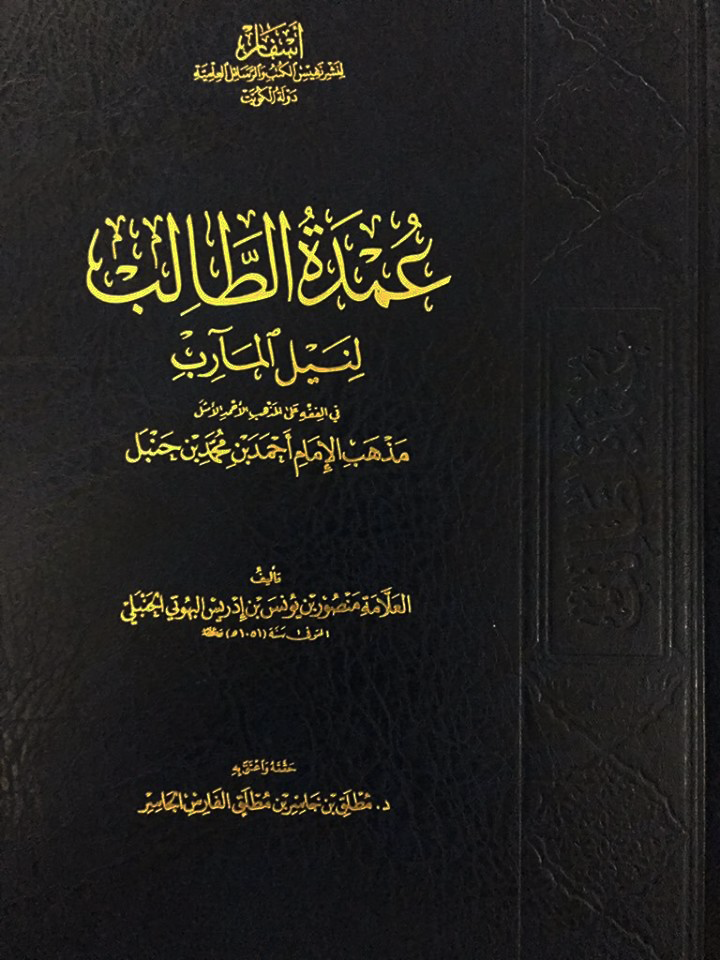
'Umdat at-Talib li Nayl al-Ma'arib — An abridged text for beginners, designed to initiate students into the basics of Hanbali fiqh before moving on to intermediate texts. It is this text that Sheikh Ibn Qa'id an-Najdi (may Allah have mercy on him) commented upon in his Hidayat ar-Raghib.
Hawashi al-Iqna' — Additional glosses on al-Hajjawi's Iqna'.
The edifice of Hanbali fiqh through al-Buhuti: To understand the importance of al-Buhuti, one must visualize the architecture of Hanbali fiqh as he consolidated it. At the summit is Ibn Qudama's Mughni (the encyclopedia). At the intermediate level is Ibn Qudama's Muqni', from which al-Hajjawi drew the Zad al-Mustaqni', which al-Buhuti commented upon in the Rawd al-Murbi'. In parallel, al-Hajjawi's Iqna' is commented upon by al-Buhuti in the Kashshaf al-Qina', and Ibn an-Najjar's Muntaha al-Iradat is commented upon by al-Buhuti in the Sharh Muntaha. Thus, al-Buhuti is the reference commentator of the three reference texts of the madhhab: the Zad, the Iqna', and the Muntaha. No other Hanbali scholar has occupied this unique position.
His death: He died on Friday, 10 Rabi' ath-Thani 1051 H in Cairo. May Allah grant him His vast mercy and welcome him into Firdaws al-A'la.
His legacy: Imam al-Buhuti (may Allah have mercy on him) is the scholar without whom Hanbali fiqh as it is studied and practiced today would not exist in its current form. His Rawd al-Murbi' is the text that every intermediate-level Hanbali student studies worldwide. His Kashshaf al-Qina' is the reference that every Hanbali mufti consults to issue his fatwas. And his Sharh Muntaha completes the triptych for the mujtahid. He was truly the Khatimat al-Muhaqqiqin — the Seal of the Verifiers — the one who put the finishing touch on the edifice of Hanbali fiqh begun by Imam Ahmad, developed by Ibn Qudama, refined by al-Mardawi and al-Hajjawi, and completed by al-Buhuti. May Allah enable us to benefit from his scholarship.