Zayn al-Din Ibn Nujaym
زين الدين ابن نجيم
About the author
Full name: Zayn ad-Din ibn Ibrahim ibn Muhammad ibn Muhammad ibn Muhammad ibn Muhammad, known as Ibn Nujaym al-Misri al-Hanafi al-Qahiri.
Birth and death: He was born in 926 H. He died on the morning of Wednesday 8 Rajab 969 H or 970 H, at the age of about 43, and was buried with his brother Sheikh 'Umar in Cairo, near the tomb of Sayyida Sukayna bint al-Husayn. May Allah have mercy on him.
His life was short — barely 44 years — but of a stupefying productivity that testifies to a considerable baraka in time. Like an-Nawawi who also died young, Ibn Nujaym left behind a body of work that would structure the Hanafi madhhab for centuries to come.
His place in the Umma: He was a faqih, an usuli among the fuqaha' of the Hanafi madhhab, and Hanafi fiqh was his greatest scholarly preoccupation — in study, fatwa, and composition.
Sheikh al-Qinali said of him in at-Tabaqat as-Saniyya: "He was an imam, a scholar who acted upon his knowledge, without equal in his time, author of al-Bahr ar-Ra'iq — his greatest and most beneficial work."
His son Sheikh Ahmad said of him: "The unique one of his era, the singular one of his time. He was the pillar of acting scholars, the model of accomplished eminences, the seal of the muhaqqiqin and the muftis."
Ibn Nujaym is often called Abu Hanifa ath-Thani (Abu Hanifa the Second) by the Hanafis, due to his elevated rank in the madhhab. He belongs to the generation of great Hanafi codifiers of the 10th Hijri century, who gave the madhhab its quasi-definitive form for the Ottoman era.
His family: The Al Nujaym family was a famous scholarly family of Egypt in the Ottoman era. His brother Siraj ad-Din 'Umar ibn Nujaym (died 1005 H) was also a great Hanafi faqih and completed some of his brother's works after his death. His son Ahmad ibn Nujaym (died 1006 H) also became a recognized scholar, and his grand-nephew Siraj ad-Din ibn Nujaym (author of an-Nahr al-Fa'iq) continued the family tradition.
His teachers: He studied under several great Hanafi scholars of his era:
- Al-'Allama Qasim ibn Qutlubugha (may Allah have mercy on him) — one of the greatest Hanafi fuqaha' of the 9th Hijri century, himself a student of Ibn al-Humam (al-Kamal)
- Al-Burhan al-Karaki (Ibn al-Karaki) — great Hanafi faqih of Damascus
- Az-Zayn as-Suduni
- Nur ad-Din 'Ali ibn Sulayman ad-Daylami
- Amin ad-Din Muhammad ibn 'Abd al-'Al al-Hanafi
- Sheikh al-Islam Shihab ad-Din Ahmad ibn Yunus al-Misri
Through this pedagogical chain, he is directly connected to the imam Ibn al-Humam (died 861 H) through Qasim ibn Qutlubugha — which partly explains his intellectual freedom and his capacity for ijtihad within the madhhab.
His students: Among his students: his son Ahmad, ash-Shihab Ahmad al-Minshawi, and others; notably:
- Muhammad ibn 'Ali al-'Alami al-Qudsi ad-Dimashqi Shams ad-Din
- 'Ali at-Turi al-Misri al-Hanafi — who would later complete the Bahr ar-Ra'iq
- 'Umar ibn Ibrahim ibn Muhammad Siraj ad-Din al-Misri (his brother)
- Muhammad ibn Yusuf ibn 'Abd al-Qadir ad-Dimyati
- Muhammad ibn 'Abd Allah at-Tumurtashi (Shams ad-Din al-Khatib) — author of the famous Tanwir al-Absar, which would become the reference matn commented upon by al-Haskafi in ad-Durr al-Mukhtar.
His context: He lived in Cairo under Ottoman rule — Egypt had just been conquered by Sultan Selim I in 923 H (1517), a few years before Ibn Nujaym's birth. This period marked the decline of the Mamluks and the beginning of Ottoman power, which imposed the Hanafi madhhab as the official madhhab of the state and gave it a new impetus. Ibn Nujaym and his contemporaries fit within this dynamic of renewal of the Hanafi madhhab.
His works: Zayn ad-Din Ibn Nujaym (may Allah have mercy on him) leaves a remarkable literary heritage in the Hanafi madhhab:
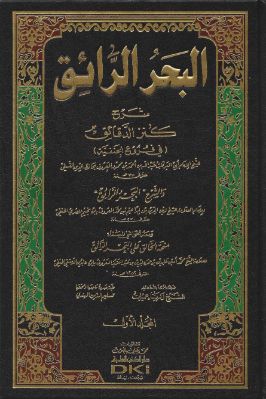
Al-Bahr ar-Ra'iq Sharh Kanz ad-Daqa'iq (The Flowing Sea — commentary on the Treasure of Subtleties) — His absolute masterpiece in Hanafi fiqh. It is a commentary on the matn Kanz ad-Daqa'iq — one of the most important Hanafi mutun — upon which commentaries abound, the most important being the Tabyin al-Haqa'iq of az-Zayla'i (died 743 H) and the Bahr ar-Ra'iq of Ibn Nujaym.
Ibn Nujaym could not complete the book before his death. It was completed by Takmilat al-Bahr ar-Ra'iq of Muhammad ibn Husayn ibn 'Ali at-Turi al-Hanafi al-Qadiri (died after 1138 H). It is published with the famous Minhat al-Khaliq — the annotations of Ibn 'Abidin (died 1252 H) — in the margins.
Published in eight volumes, the Bahr ar-Ra'iq is one of the absolute summits of Hanafi fiqh. It is distinguished by:
- The depth of fiqhi analysis — each question is treated with arguments and counter-arguments.
- The integration of comparative fiqh — citations from other madhhabs.
- Ijtihad within the madhhab — Ibn Nujaym does not hesitate to criticize established positions when the evidence requires it.
- The synthesis of divergent positions within the madhhab — zahir ar-riwaya vs. nawadir, positions of the early scholars vs. the later ones.
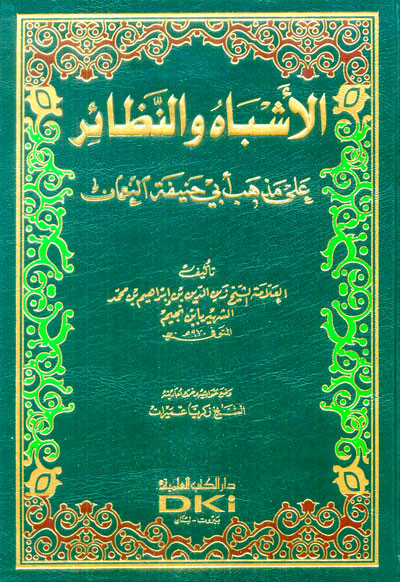
Al-Ashbah wa an-Naza'ir 'ala Madhhab Abi Hanifa an-Nu'man (The Similitudes and Analogues according to the Madhhab of Abu Hanifa an-Nu'man) — His famous work in qawa'id fiqhiyya (general legal rules) and applied usul. It is one of the most important books of qawa'id fiqhiyya ever written in any madhhab, to be ranked alongside the Ashbah wa an-Naza'ir of as-Suyuti (Shafi'i). The work is organized in seven sections (funun):
- The fundamental rules (al-qawa'id al-kulliyya) — including the six great classical rules of fiqh: "Certainty is not removed by doubt," "Difficulty brings ease," "Harm must be repelled," etc.
- General principles (qawa'id al-usul)
- Questions unified by a single rule (al-jam' wa al-farq)
- Fiqhi riddles (al-alghaz)
- Subtleties (al-hiyal) with a discussion of their legitimacy
- Distinctions (al-fara'iq)
- Accounts and correspondences
This work had a colossal influence. Ibn 'Abidin wrote an annotation entitled Nuzhat an-Nawazir 'ala al-Ashbah wa an-Naza'ir. It is still studied today in all Hanafi circles worldwide and has shaped the legal thought of the madhhab for the following centuries.
Ar-Rasa'il az-Zayniyya (The Zaynian Epistles) — 41 epistles on fiqhi questions. These short monographs — or rasa'il — each treat a precise legal question with great depth. This format is typical of later fuqaha' and allows deepening specific questions without diluting them in a large work.
Al-Fatawa az-Zayniyya (The Zaynian Fatwas) — A collection of his fatwas. As a recognized mufti of Cairo, Ibn Nujaym answered innumerable questions, gathered in this collection. These fatwas are a precious source for understanding the real legal concerns of the Sunni Muslim world in the 10th Hijri century.
Al-Fawa'id az-Zayniyya — Another collection of legal benefits.
Lubb al-Usul (The Core of Usul) — His work in usul al-fiqh.
Sharh al-Manar — His commentary on the famous Manar fi Usul al-Fiqh of Hafiz ad-Din an-Nasafi (died 710 H) — one of the great Hanafi usul mutun.
Sharh al-Kanz — His commentary on the Kanz (which became the Bahr ar-Ra'iq).
As-Sagha'ir wa al-Kaba'ir — An epistle on minor and major sins, commented upon by his grand-nephew Zayn ad-Din Ahmad ibn Ibrahim ibn Nujaym.
And other works of lesser scope.
His death: He died on the morning of Wednesday 8 Rajab 970 H, at the age of about 43, and was buried with his brother Sheikh 'Umar in Cairo, near the tomb of Sayyida Sukayna bint al-Husayn. May Allah grant him His vast mercy and welcome him into Firdaws al-A'la.
To die at 43-44 years, after having produced two of the greatest works of the Hanafi madhhab (al-Bahr ar-Ra'iq and al-Ashbah wa an-Naza'ir), is a resounding sign of divine baraka in the life of this scholar.
His legacy: The imam Zayn ad-Din Ibn Nujaym (may Allah have mercy on him) occupies an absolutely essential place in the late Hanafi madhhab. His Bahr ar-Ra'iq is one of the three great commentaries on Kanz ad-Daqa'iq, with the Tabyin al-Haqa'iq of az-Zayla'i and the Minhat al-Khaliq of Ibn 'Abidin — each complementary to the others. His Ashbah wa an-Naza'ir is the reference book in Hanafi qawa'id fiqhiyya to this day: anyone who studies the legal rules of the Hanafi madhhab necessarily passes through this work. Through his work, he crystallized Hanafi fiqh at the pivotal moment when Egypt was transitioning from Mamluk to Ottoman power, and transmitted to the Ottoman Hanafi world a structured and accessible corpus. His students — notably at-Tumurtashi — would in turn lay the foundations of the Durr al-Mukhtar and the Radd al-Muhtar of Ibn 'Abidin which remain today the supreme references of the Hanafi madhhab in its final form. His brother and his son continued the family tradition, making the Al Nujaym one of the most influential scholarly dynasties in late Hanafi history. SubhanAllah, that a man who died at 43 could leave such a scientific monument testifies to the baraka that Allah deposits in His sincere servants. May Allah allow us to benefit from his knowledge and elevate his abode to the highest degrees of Paradise.