Ibn Mahmud al-Mawsili
ابن مودود الموصلي
About the author
Full name: Abu al-Fadl Majd ad-Din 'Abd Allah ibn Mahmud ibn Mawdud ibn Mahmud ibn Baldaji al-Mawsili al-Hanafi.
Birth and death: He was born in Mosul in Shawwal 599 H (1203). He died on Saturday, 20 Muharram 683 H (1284) in Baghdad. May Allah have mercy on him.
His place in the Umma: He is described as the imam, the 'allama, the muhaddith, the historian, the faqih, the mufassir, the muhaqqiq, the hafiz. He was unique in his time in the furu' (branches of fiqh) and the usul (foundations). When he issued a fatwa, he did not need to consult the texts due to his perfect memorization and his complete knowledge of the branches of the madhhab and the manner of applying them. SubhanAllah, to carry the entire Hanafi fiqh in one's memory to the point of no longer needing to return to the books — such is the rank of the great fuqaha'.
He was a faqih and a scholar of the category of jurists capable of distinguishing between the strong and the weak, and between the preponderant (rajih) and the non-preponderant (marjuh).
His origins and education: He was born in Mosul and received the foundations of the sciences from his father, Abu ath-Thana' Mahmud, in Mosul. He studied at the Madrasa as-Sarimiyya, under Sheikh 'Umar ibn Muhammad ibn Tabarzad. He learned from Mismar ibn 'Umar ibn al-'Uwais. Then he traveled to Damascus, where he studied under Jamal ad-Din al-Husayri, a great Hanafi jurist of his time. He then went to Baghdad, where he read Sahih al-Bukhari under Sheikh Abu al-Faraj Muhammad ibn 'Abd ar-Rahman and Abu al-Hasan 'Ali ibn Abi Bakr ibn Ruzbih. He also studied under Sheikh 'Umar ibn Muhammad as-Suhrawardi.
His positions: He held the office of Qadi (judge) of Kufa for a period. Then he settled in Baghdad as a teacher, and it was there that he spent the rest of his life, teaching, issuing fatwas, and transmitting hadith.
His character and piety: He was patient in teaching. It would happen that he prayed the Fajr prayer and then remained seated in his mihrab (place of prayer) until the time of the 'Asr prayer, occupied with teaching, dictating hadith, and knowledge. SubhanAllah, from Fajr to 'Asr without interruption — an entire life devoted to the science of the religion.
His student Abu al-'Ala' Mahmud al-Faradi said of him: "Abu al-Fadl was a scholar who possessed numerous works on the questions of khilaf (disagreements) and the knowledge of transmitters. He never ceased issuing fatwas, teaching, and making hadith heard until the end of his life."
His works: His works occupy a central place in the edifice of Hanafi fiqh:
Al-Mukhtar li al-Fatwa (The Chosen for the Fatwa) — An abridgment of Hanafi fiqh that he composed in the flower of his youth, in which he chose the opinion of Imam Abu Hanifa. The book was widely adopted by the people. This matn is one of the four fundamental texts (mutun) upon which the later Hanafi scholars relied most heavily, namely: al-Wiqaya, Majma' al-Bahrayn, al-Mukhtar, and Kanz ad-Daqa'iq. SubhanAllah, to compose at a young age a text that would become one of the four pillars of Hanafi fiqh — this is the baraka that Allah places in the knowledge of His sincere servants.
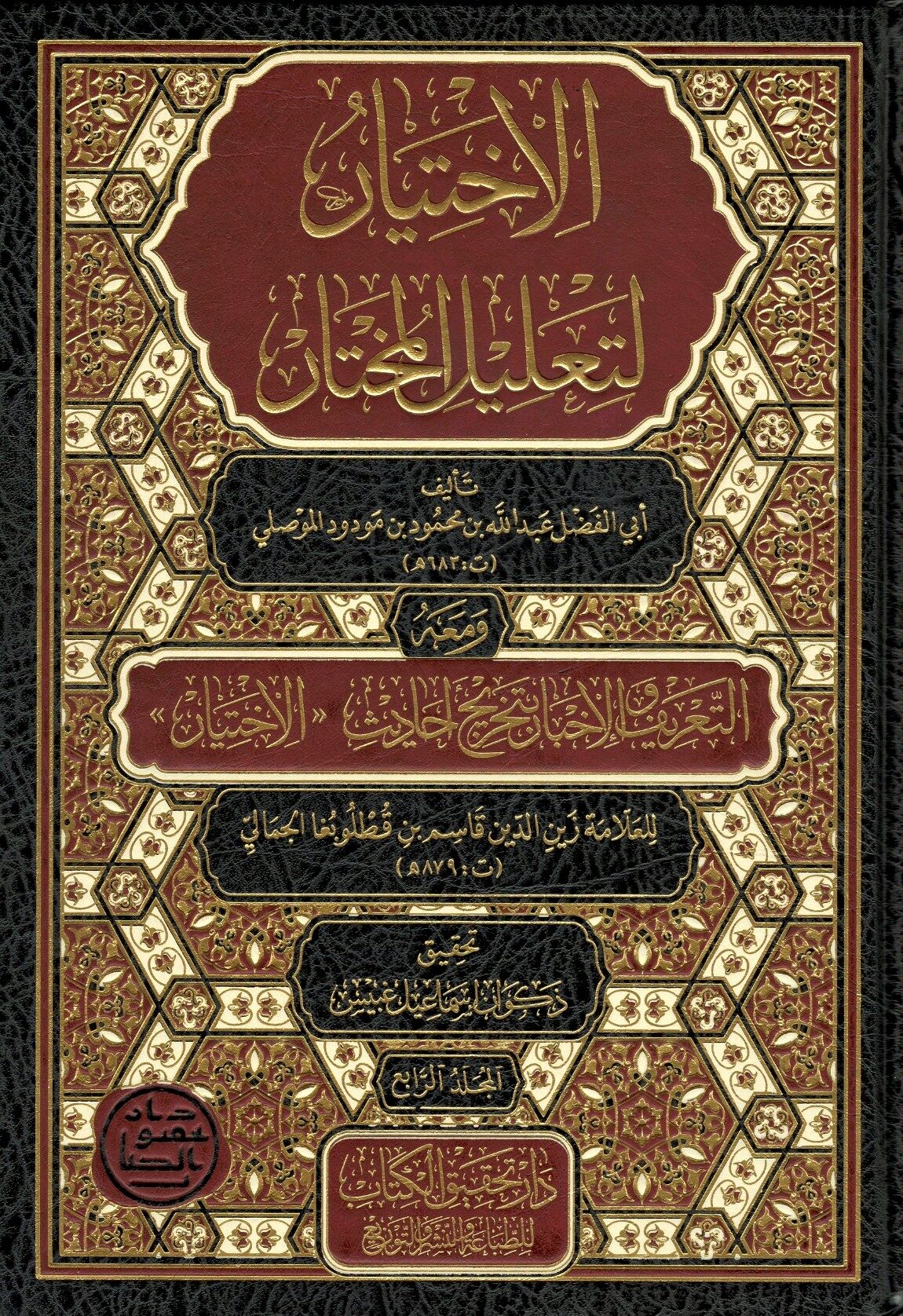
Al-Ikhtiyar li Ta'lil al-Mukhtar (The Choice for the Explanation of the Mukhtar) — When the people asked him for a commentary on his Mukhtar, he composed the Ikhtiyar, in which he indicates the juridical reasons ('ilal) of the questions and their meanings, mentioning therein the branches of fiqh that are needed and relied upon in transmission. This work is published in five volumes and remains one of the most studied Hanafi fiqh works, appreciated for its clarity and accessible style.
Sharh al-Jami' al-Kabir li ash-Shaybani — A commentary on the Jami' al-Kabir of Imam Muhammad ibn al-Hasan ash-Shaybani (may Allah have mercy on him), the great disciple of Abu Hanifa and one of the founders of Hanafi fiqh.
Al-Mushtamil 'ala Masa'il al-Mukhtasar — Another work of fiqh.
His death: He died on Saturday, 20 Muharram 683 H. His funeral cortege was grand: the funeral prayer was performed over him at the Palace Mosque (Jami' al-Qasr) in Baghdad, then at the Mustansiriyya Madrasa, then outside Bab as-Sultan (present-day Bab al-Mu'azzam), then at the mosque of Imam al-A'zam (Abu Hanifa). He was buried at the Khayzuran cemetery, next to the mausoleum of Imam Abu Hanifa, under his dome. May Allah grant him His vast mercy — to be buried beside Imam Abu Hanifa, the founder of the madhhab he had spent his life serving, what an honorable end!
His legacy: Imam al-Mawsili (may Allah have mercy on him) is one of the great builders of the edifice of Hanafi fiqh. His Mukhtar — one of the four fundamental mutun of the madhhab — and his Ikhtiyar which comments upon it are texts that have trained generations of Hanafi jurists from the seventh Hijri century to the present day. The beauty of his work lies in the fact that he first composed the matn (base text) in his youth, then the sharh (commentary) at maturity — the student becomes master, and the master illuminates his own text for future generations. His works continue to be studied in madrasas across the Muslim world, from Turkey to the Indian subcontinent, and are appreciated for their clarity, precision, and accessibility. May Allah allow us to benefit from his knowledge.