Ibn al-Jawzi
ابن الجوزي
About the author
Full name: Jamāl ad-Dīn Abū al-Faraj 'Abd ar-Rahmān ibn 'Alī ibn Muhammad al-Jawzī al-Qurashī al-Baghdādī.
Birth and death: He was born around 510 H (1116) in Baghdad, and he died on 16 Rabī' al-Awwal 597 H (June 1201) in the same city, may Allāh have mercy on him.
His place in the Ummah: He was a jurist, preacher, orator, traditionist, historian, judge, and philologist who played a major role in the propagation of the Hanbali school in Baghdad in the 12th century. He bore the title of al-Hāfiz for his mastery of hadith. He is arguably the most prolific scholar in Islamic history, with a number of works that leaves one speechless.
His origins and youth: He was born in Baghdad into a family of Hanbali affiliation. His father died when he was only three years old, and he was raised by his aunt who facilitated his early studies. His uncle, Muhammad ibn Nāsir al-Baghdādī, a scholar of hadith, fiqh, and grammar, played an important role in his education.
His education: He received a very comprehensive education during his youth and had the fortune of studying under some of the most renowned Baghdadi scholars of his era, among whom were Ibn az-Zāghūnī (d. 1133), Abū Bakr ad-Dīnawarī (d. 1137), Abū Mansūr al-Jawālīqī (d. 1144), and Abū Hakīm an-Nahrawānī (d. 1161). He became an exceptional scholar of the 12th century, particularly in the sciences of hadith.
His rise and preaching: He began his career as a teaching assistant under his mentor Abū Hakīm an-Nahrawānī, then succeeded him as the head of two madrasas after the latter's death in 1161. His preaching career began thanks to the patronage of the Hanbali vizier Ibn Hubayra, who gave him free access to preach in his own residence. Under the caliph al-Mustadī, who was particularly favorable to Hanbalism, Ibn al-Jawzī reached the peak of his influence. By 1179, he had written more than one hundred and fifty works and was directing five madrasas in Baghdad simultaneously.
His oratorical talent was legendary. His sermons attracted immense crowds in Baghdad, and the caliph had a minbar (platform) specially built for him in the palace mosque. He knew how to combine eloquence, historical narratives, and doctrinal exhortation in a manner that touched both scholars and the common people.
His defense of the Sunnah: A fervent defender of Hanbali doctrine, he constantly sought out doctrinal heresies. He attacked and combated those whom he considered to have deviated from strict traditionalist Islam. He was particularly critical of the excesses of the Sufis and deviant groups. His approach favored fidelity to the texts of the Qur'an, the Sunnah, and the interpretations of the earliest generations.
His relationship with time: He said: "Many people would pay me social visits, and I would do the same, until I realized that time is the noblest and most precious thing, and I then began to detest visits." This statement summarizes the mindset that enabled him to produce such a colossal body of work.
His trials: After the ascension of the caliph an-Nāsir, Ibn al-Jawzī's Hanbali vizier was arrested and replaced by a Shia vizier. The caliph eventually condemned Ibn al-Jawzī to exile and house arrest for five years. The exact reasons remain debated, but it seems that Ibn al-Jawzī had written a direct refutation of the caliph's policy. After five years of exile, he was finally freed thanks to the intercession of the caliph's mother, described as a very pious woman.
His works: The number of his works reaches the staggering figure of 376 texts. Among the most famous:
Talbīs Iblīs (The Devil's Deception) — A major work in which he exposes how Iblīs deceives people of different categories: scholars, ascetics, Sufis, sects, and ordinary Muslims. An indispensable book for anyone who wants to guard against innovations and misguidance.
Sifat as-Safwa (The Qualities of the Elite) — A vast history of zuhd and piety, in which he argues that the true ascetics are those who modeled their lives on that of the Companions of the Prophet ﷺ.
Zād al-Masīr fī 'Ilm at-Tafsīr — His tafsīr of the Qur'an, a reference in exegesis.
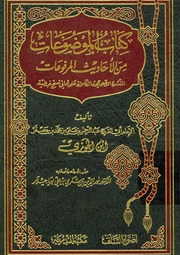
Al-Mawdū'āt — His work on fabricated hadiths (mawdū'āt), a foundational work in the sciences of hadith, though some scholars have criticized him for including hadiths that are not truly fabricated.
Manāqib al-Imām Ahmad — His monumental biography of Imam Ahmad ibn Hanbal, a historical and spiritual masterpiece.
Sayd al-Khātir (Captured Thoughts) — A collection of personal reflections and meditations of remarkable depth.
Minhāj al-Qāsidīn — His adaptation of al-Ghazālī's Ihyā' 'Ulūm ad-Dīn, from which he removed the weak and fabricated hadiths as well as the problematic content related to Sufism, keeping the benefits and reminders that conform to the Sunnah. Ibn Qudāma al-Maqdisī (may Allāh have mercy on him) later made an abridgment of it (Mukhtasar Minhāj al-Qāsidīn), much appreciated by students of knowledge.
Note: Despite his greatness, some Hanbali scholars criticized him for positions in matters of 'aqīdah that sometimes departed from the strict path of the Salaf, notably a tendency toward ta'wīl (figurative interpretation) of certain divine Attributes, which was criticized by scholars such as Sheikh al-Islām Ibn Taymiyyah (may Allāh have mercy on him). This shows that even the greatest scholars are not infallible, and that one takes from each what is in conformity with the Qur'an and the Sunnah.
His death: He died on 16 Rabī' al-Awwal 597 H (June 1201) at the age of 87, after having devoted every moment of his life to knowledge, writing, and preaching. May Allāh grant him His vast mercy and admit him into Firdaws al-A'lā.
His legacy: Imam Ibn al-Jawzī remains one of the greatest Hanbali scholars in history. Through his passionate preaching, his hundreds of works, and his fierce defense of the Sunnah, he contributed immeasurably to the preservation and propagation of the Hanbali madhhab at a time when it was the smallest of the four madhhabs. His Talbīs Iblīs remains an indispensable work for every Muslim concerned with recognizing the traps of innovation, and his Sayd al-Khātir remains a treasure of wisdom and reminder. May Allāh allow us to benefit from his knowledge.