Ibn Qudama
ابن قدامة
About the author
Full name: Muwaffaq ad-Din Abu Muhammad 'Abd Allah ibn Ahmad ibn Muhammad ibn Qudama ibn Miqdam ibn Nasr al-Maqdisi al-Jamma'ili ad-Dimashqi as-Salihi al-Hanbali.
Birth and death: He was born in the village of Jamma'il, near Jerusalem, in Sha'ban 541 H (January-February 1147). He died on a Saturday, the day of Eid al-Fitr, on July 7, 1223 (620 H) in Damascus. May Allah have mercy on him. To die on the day of Eid, after a Ramadan of fasting and worship — what a blessed end for a servant of Allah!
His place in the Umma: He is considered one of the most authoritative classical figures of the Hanbali tradition and played a major role in its development and transmission during the medieval period. Sheikh al-Islam Ibn Taymiyya (may Allah have mercy on him) said of him: "No one possessing more understanding of the religion has entered Bilad ash-Sham (Syria) after al-Awza'i, other than Sheikh al-Muwaffaq." Ibn an-Najjar described him thus: "The Hanbali imam of the mosque of Damascus, trustworthy, of noble figure, extremely generous, of pure character, a prudent worshiper, following the methodology of the Salaf, emitting light of knowledge and piety. One could learn from him simply by observing him, before he even began his discourse." And Ibn Rajab (may Allah have mercy on him) said: "He generated advantages for all Muslims on a general level, and for the scholars of the Hanbali madhhab on a specific level. His books were widely disseminated and became very popular, due to the nobility of his intention and his sincerity in writing them."
His origins and emigration: Born in the town of Jamma'il in Nablus, Palestine, he emigrated with his family to Damascus at the age of eight, after the Crusaders had taken control of his country. This emigration — fleeing the Crusaders toward the land of knowledge and jihad — profoundly marked his life and placed him at the heart of the era of Salah ad-Din al-Ayyubi (may Allah have mercy on him).
His education: He memorized the Quran at a young age, studied its sciences, and was known for having beautiful handwriting. He studied in Damascus, then between the years 560 and 561 H, he embarked on an educational expedition to Baghdad. At the beginning of his stay, he spent a brief period in the company of Sheikh 'Abd al-Qadir al-Jilani (may Allah have mercy on him), then in the ninetieth year of his life. Under his guidance, he studied the Mukhtasar of al-Kharaqi with understanding and meticulous examination. Sheikh 'Abd al-Qadir died shortly afterward, and al-Muwaffaq then turned to the Sheikh of the Hanbalis and the chief jurist of Iraq, Ibn al-Munna (477-564 H), under whom he studied the fiqh of the school of Imam Ahmad. After four years in Baghdad, he returned to Damascus.
He also studied under Ibn al-Jawzi and many other scholars of Baghdad and Damascus.
His jihad alongside Salah ad-Din: Late in his life, Ibn Qudama left Damascus to join Salah ad-Din in his expedition against the Franks in 1187, participating notably in the siege of Jerusalem. SubhanAllah, the scholar who had fled Jerusalem as a child, driven out by the Crusaders, returned as an adult, sword in hand, alongside the liberator Salah ad-Din, to reconquer it for Islam.
His 'aqida: He was considered one of the foremost promoters of the Athari school of 'aqida in his time, and was known not only for his opposition to kalam but also for his opposition to the Ash'ari school. He composed Lum'at al-I'tiqad and Dhamm at-Ta'wil, two major treatises in the defense of the 'aqida of the Salaf. His methodology in 'aqida was summarized as: to affirm what Allah and His Prophet (peace and blessings be upon him) have affirmed, and to negate what they have negated, without tahrif, ta'til, takyif, or tamthil.
His works: His works form a complete edifice of Hanbali fiqh and 'aqida:
Al-Mughni — His absolute masterpiece and one of the greatest works of fiqh ever written in the history of Islam. It is a complete juridical encyclopedia that compares the legal opinions of the different Sunni schools while presenting the Hanbali position in detail. It was written as a commentary on al-Kharaqi's Mukhtasar, but far surpassed it to become a standalone reference in comparative fiqh. Published in nine to sixteen volumes depending on the edition, it is indispensable for any scholar who wishes to exercise ijtihad.
Al-Kafi fi Fiqh al-Imam Ahmad — An intermediate work of Hanbali fiqh, more detailed than the Muqni' but more concise than the Mughni.
Al-Muqni' — A concise text of Hanbali fiqh that became one of the most studied mutun of the madhhab. It was upon this text that Ibn an-Najjar al-Futuhi composed his famous Muntaha al-Iradat.
Al-'Umda fi al-Fiqh — An abridgment of Hanbali fiqh for beginners, confining each question to a single position to facilitate learning.
Rawdat an-Nazir wa Junnat al-Munazir — His foundational work in usul al-fiqh (foundations of jurisprudence), which became the reference text of Hanbali usul.
Lum'at al-I'tiqad al-Hadi ila Sabil ar-Rashad — A concise treatise of Athari 'aqida, based on the texts of the Quran and the Sunna, which became a foundational matn for students of 'aqida worldwide.
Dhamm at-Ta'wil — A treatise against the ta'wil (allegorical interpretation) of the divine Attributes.
Tahrim an-Nazar fi Kutub Ahl al-Kalam — A treatise against the books of kalam (speculative theology).
Al-Wasiyya — A concise and profound spiritual testament, summarizing the realities of this world and the Hereafter.
Mukhtasar Minhaj al-Qasidin — A summary of Ibn al-Jawzi's work, which is itself a purified abridgment of al-Ghazali's Ihya' 'Ulum ad-Din, stripped of weak hadiths and problematic elements.
And other works of tafsir, hadith, genealogy, and biographies.
His death: He died on the day of Eid al-Fitr 620 H in Damascus. May Allah grant him His vast mercy and admit him into Firdaws al-A'la.
His legacy: Imam Ibn Qudama (may Allah have mercy on him) is the greatest Hanbali jurist after Imam Ahmad himself. His Mughni is to Hanbali fiqh what Fath al-Bari is to hadith: a monumental work that no one can do without. His fiqh texts — al-'Umda, al-Muqni', al-Kafi, al-Mughni — form a complete curriculum that accompanies the student from the beginner level to the level of ijtihad. His Lum'at al-I'tiqad is the first text of 'aqida that millions of Hanbali students memorize. And his personal journey — from a refugee child fleeing the Crusaders to a scholar-warrior participating in the liberation of Jerusalem — is a lesson in faith, patience, and courage. May Allah allow us to benefit from his knowledge and gather us with him in Firdaws al-A'la.
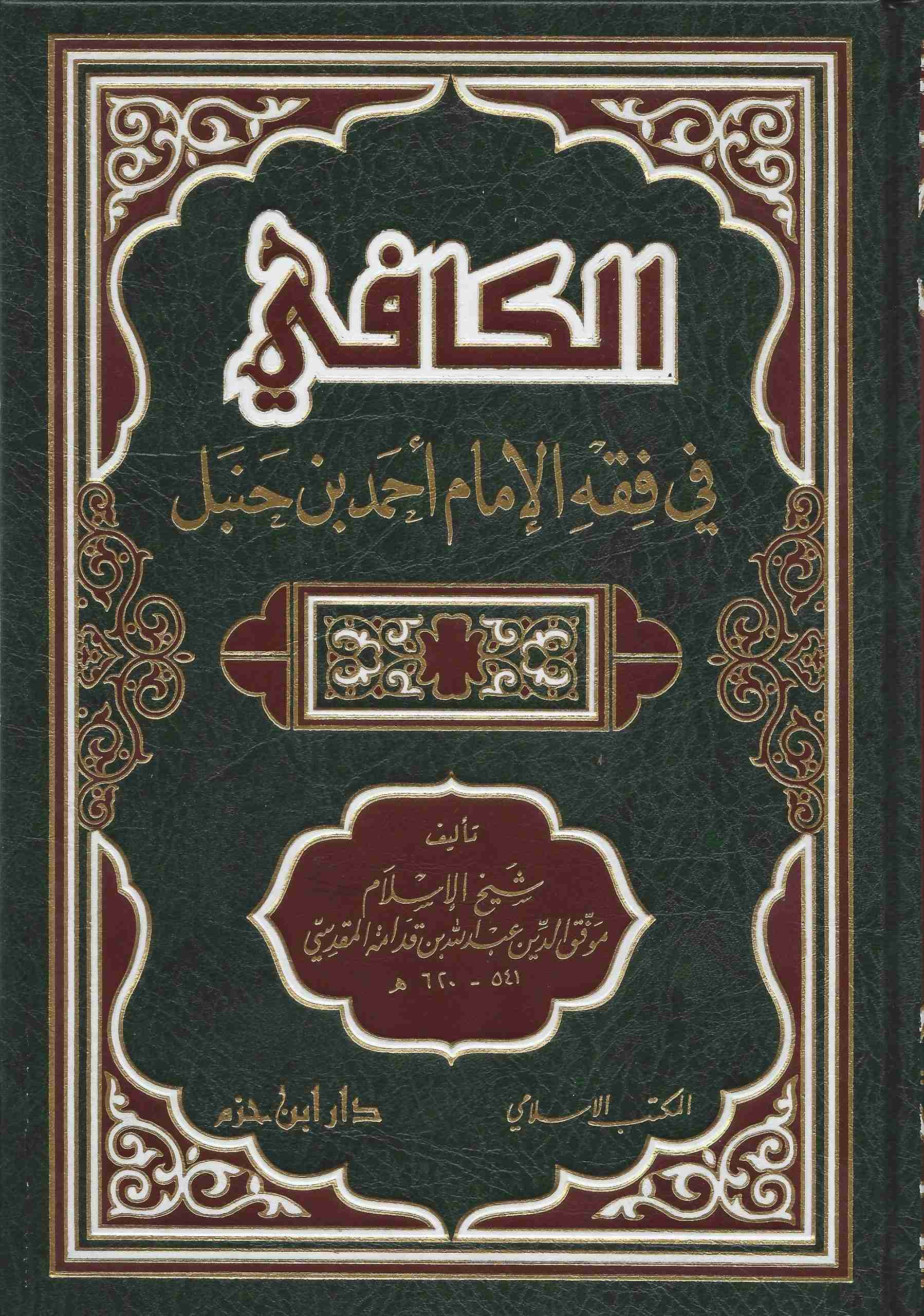
Al-Kāfī
Ibn Qudama
Hanbali Jurisprudence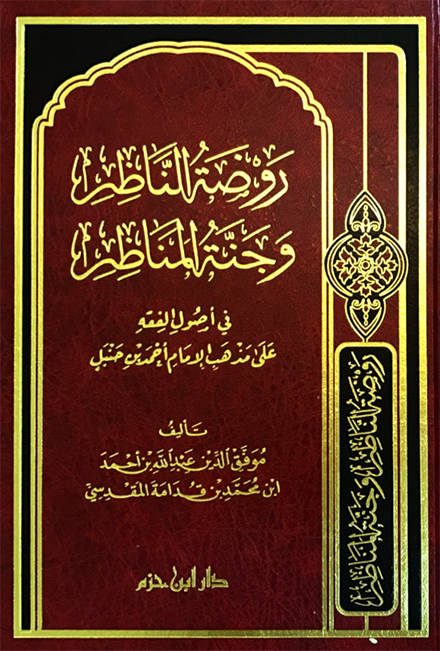
Rawḍat al-Nāẓir
Ibn Qudama
Principles of Islamic Jurisprudence
Al-Muqniʿ
Ibn Qudama
Hanbali Jurisprudence
Risālah fī al-Qurʾān wa-Kalām Allāh
Ibn Qudama
Creed
Dhamm al-Taʾwīl
Ibn Qudama
Hadith Collections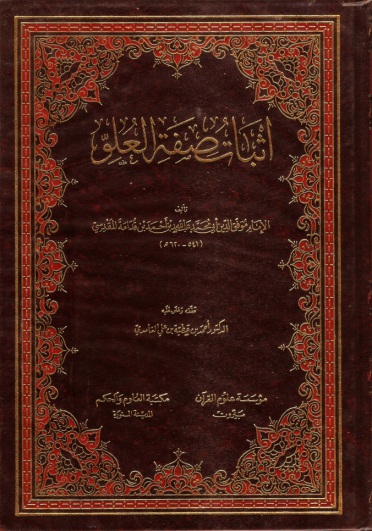
Ithbāt Ṣifat al-ʿUlū
Ibn Qudama
Hadith Collections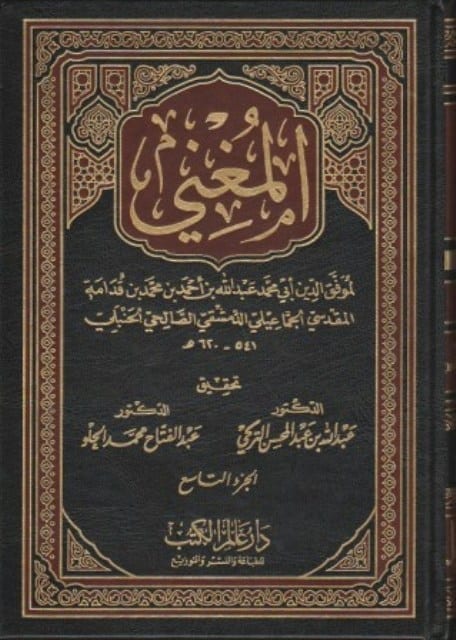
Al-Mughnī
Ibn Qudama
Hanbali Jurisprudence