Al-Muzani
المزني
About the author
Full name: Abu Ibrahim Isma'il ibn Yahya ibn Isma'il ibn 'Amr ibn Muslim al-Muzani al-Misri ash-Shafi'i.
His nisba "al-Muzani" refers to the great Arab tribe of Muzayna, one of the classic Arab tribes well known during the time of the Prophet (peace and blessings be upon him) (the Prophet praised the Muzaynis through several hadiths mentioning their early conversion to Islam).
Birth and death: His birth was in the year of the death of al-Layth ibn Sa'd, in 175 H. He died in Ramadan, six days before the end of the month, in the year 264 H (878), at the age of 89. He was buried near the tomb of Imam ash-Shafi'i (may Allah be pleased with him), at al-Qarafa as-Sughra at the foot of Muqattam. May Allah have mercy on him.
His place in the Umma: The imam, the 'allama, the jurist of the community, the standard-bearer of the ascetics, Abu Ibrahim Isma'il ibn Yahya ibn Isma'il ibn 'Amr ibn Muslim al-Muzani al-Misri, the student of ash-Shafi'i.
He was one of the most eminent imams of the Shafi'i school, and the most influential of Imam ash-Shafi'i's students (d. 204 H) in the dissemination of fiqh and usul. He was a mujtahid scholar and a brilliant author.
Imam ash-Shafi'i (may Allah have mercy on him) — the master — said of him this extraordinary testimony that will remain inscribed in the books of history: "If he were to debate against Shaytan, he would defeat him." And he said: "Al-Muzani is the defender of my madhhab (nasir madhhabi)."
Ibn as-Subki reports from his father: "No one knows the value of ash-Shafi'i except al-Muzani." For al-Muzani combined Shafi'i fiqh with that of Abu Hanifa, Malik, and al-Layth, and encompassed the old and new books of ash-Shafi'i, to the point that his Mukhtasar manifested his complete encirclement of all of ash-Shafi'i's questions, their references, their agreements, and their disagreements.
Ahmad ibn Salih al-Misri said: "If a man swore that he had not seen the like of al-Muzani, he would be telling the truth."
His origins and history: Al-Muzani was the maternal nephew of Imam ash-Shafi'i — his mother was the sister of ash-Shafi'i according to certain transmissions. This kinship placed him from childhood in the direct entourage of the greatest imam of his time.
His conversion to fiqh and the madhhab of Ahl al-Hadith: The beginning of al-Muzani's scholarly life was in the madhhab of the people of ra'y and kalam. His encounter with ash-Shafi'i, when the latter arrived in Egypt, was the cause of his transition to the madhhab of the Ahl al-Hadith in 'aqida and fiqh.
He himself recounts this remarkable story: "I was interested in kalam before ash-Shafi'i arrived. When he arrived, I came to see him and asked him a question about kalam. He said to me: 'Do you know where you are?' I said: 'Yes, in the mosque of Fustat.' He said to me: 'You are at Taran.' Then he posed me a question of fiqh, to which I responded. He introduced something that spoiled my answer; I answered differently, he introduced something that spoiled my answer again — every time I answered, he spoiled my answer. Then he said to me: 'This fiqh which contains the Book, the Sunna, and the sayings of the people can be penetrated by that — what then of kalam about the Lord of the worlds, where the fall is grave?'" Al-Muzani said: "I then abandoned kalam and turned to fiqh."
SubhanAllah, what wisdom from ash-Shafi'i — leading his nephew to abandon kalam and embrace fiqh through a simple pedagogical demonstration!
His character and piety: Imam al-Muzani (may Allah have mercy on him) is known as 'Alam az-Zuhhad — the standard-bearer of the ascetics. He was ascetic, scrupulous, detached from the worldly life, and his supplications were answered. When he missed a congregational prayer, he would repeat it 25 times. He washed the dead as an act of worship and in hope of reward, saying: "I do it so that my heart may soften."
He washed the dead voluntarily, and prayed two rak'as for each question of his Mukhtasar. His supplications were answered, and he was of immense piety. None of ash-Shafi'i's companions surpassed him, and it was he who took charge of washing ash-Shafi'i's body on the day of his death.
Yunus ibn 'Abd al-A'la said of him: "He was among the ascetics of this world, and among the best of Allah's creatures."
Abu Ishaq ash-Shirazi said: "He was ascetic, knowledgeable, a mujtahid, a polemicist, expert in argumentation, diving into subtle meanings."
His rank as a mujtahid: Although al-Muzani is affiliated with the Shafi'i school, scholars recognize that he reached the rank of ijtihad mutlaq (independent ijtihad), meaning he did not merely follow ash-Shafi'i but derived positions from his own capacity. His positions, often different from those of his master, form a "madhhab within the madhhab" of the Shafi'i school that later scholars called ikhtiyarat al-Muzani (the choices of al-Muzani). He had himself reached a level where he could have founded an independent madhhab, but he preferred to remain within the framework of the madhhab of his uncle and master.
His ijaza: A sign of the esteem that Imam ash-Shafi'i had for him: during his final illness, ash-Shafi'i summoned him and predicted his future. Ar-Rabi' ibn Sulayman said: "We entered upon ash-Shafi'i at the time of his death — myself, al-Buwayti, al-Muzani, and Muhammad ibn 'Abd Allah ibn 'Abd al-Hakam. Ash-Shafi'i looked at us at length then turned to us and said: 'As for you, O Abu Ya'qub (al-Buwayti), you will die in your chains. As for you, O Muzani, you will have agitated periods in Egypt, and you will become the greatest analogical jurist (aqyas ahl) of this era...'" The prediction was fulfilled: al-Buwayti died in prison in chains during the mihna (the famous ordeal of khalq al-Quran), and al-Muzani indeed became the greatest Shafi'i jurist of his time.
His teachers: He transmitted from ash-Shafi'i, from 'Ali ibn Ma'bad ibn Shaddad, from Nu'aym ibn Hammad, and others. His transmission is not abundant, but he was outstanding in fiqh.
His students: Through al-Muzani, the knowledge of ash-Shafi'i spread across all horizons of the Muslim world. Adh-Dhahabi said of him: "A great number of scholars took from him, and through him the madhhab of Imam ash-Shafi'i spread across the horizons."
Among his most famous students:
- Imam Ibn Khuzayma (d. 311 H) — the imam of imams, author of the Sahih known under his name
- Imam at-Tahawi (d. 321 H) — his maternal nephew, author of 'Aqida at-Tahawiyya, who began studying Shafi'ism under al-Muzani before switching to Hanafism
- Abu Ja'far at-Tirmidhi — another great Shafi'i jurist
- Zakariyya ibn Yahya as-Saji — great muhaddith
- Ibn Jarir at-Tabari — studied briefly under him (although Tabari later founded his own school)
- Abu al-Qasim al-Anmati — transmitter of his school
Through these students, the knowledge of al-Muzani — and thus that of ash-Shafi'i — reached Baghdad, Khurasan, and all the major regions.
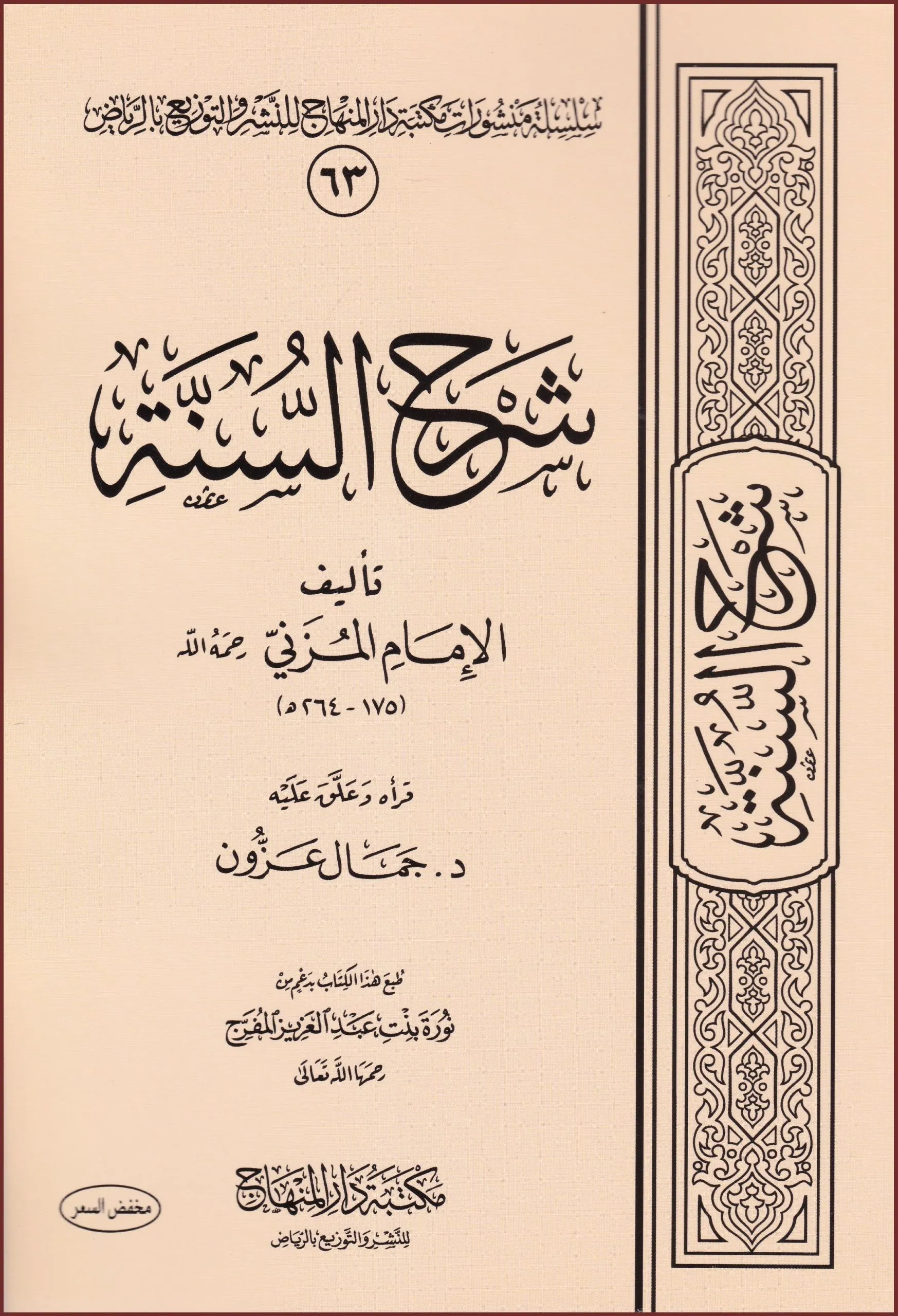
His works: He composed his Mukhtasar in fiqh — the lands were filled with it, and several great scholars commented on it, to the point that it was said: "The young bride had in her trousseau a copy of al-Muzani's Mukhtasar." He also composed al-Jami' al-Kabir, al-Jami' as-Saghir, al-Manthur al-Mabsut, al-Masa'il al-Mu'tabara, at-Targhib fi al-'Ilm, Kitab al-Watha'iq, ad-Daqa'iq wa al-'Aqarib, Nihayat al-Ikhtisar.
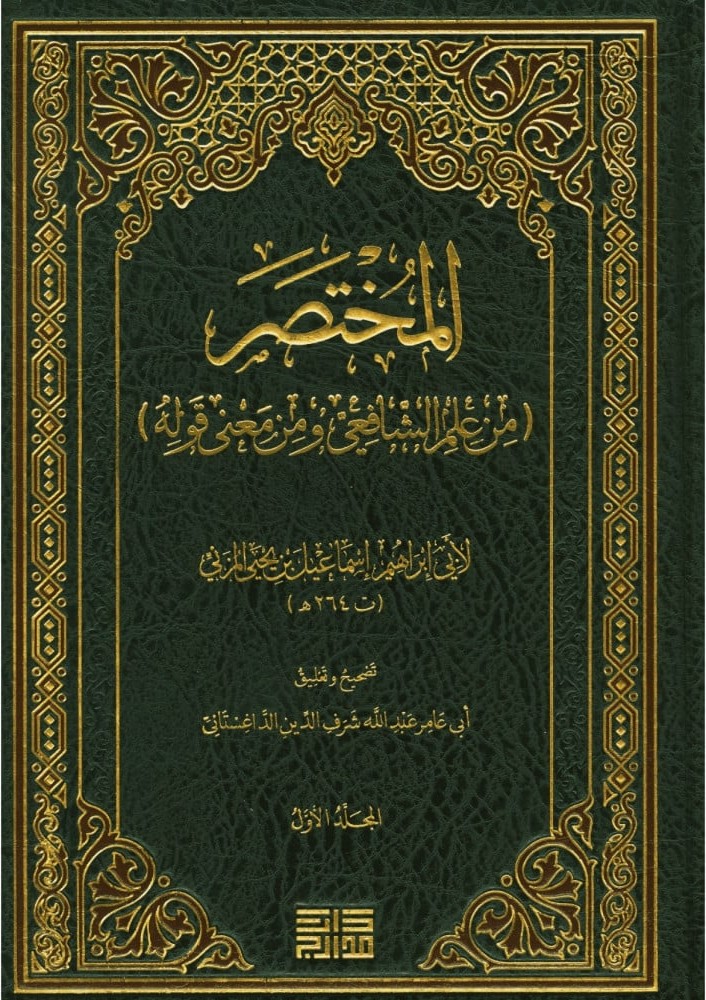
Mukhtasar al-Muzani — His absolute masterpiece and one of the most influential works in the history of the Shafi'i madhhab. This book is considered one of the earliest compositions in the Shafi'i madhhab — more than that, it is the first composition in Shafi'i fiqh after the Kitab al-Umm. It is stated in Kashf az-Zunun: "He was the first to compose in the madhhab of ash-Shafi'i."
He explains in the introduction: "I have abridged this book from the knowledge of Muhammad ibn Idris ash-Shafi'i (may Allah have mercy on him) and from the meaning of his words, to bring it closer to the one who desires it, while informing him of his prohibition of blind imitation of him and of others, so that he may examine it for his religion and be cautious for himself. And success comes from Allah."
Abu al-'Abbas Ahmad ibn Surayj (one of the Shafi'i giants) said of the Mukhtasar: "It is the foundation of the books composed in the madhhab of ash-Shafi'i — upon its model they arranged, and to its words they explained and commented."
Adh-Dhahabi said: "The lands were filled with his Mukhtasar in fiqh, and several great scholars commented on it — to the point that it was said: 'The young bride had in her trousseau a copy of al-Muzani's Mukhtasar.'"
Al-Bayhaqi said: "We know of no book composed in Islam of greater benefit, more general blessing, and more abundant fruits than his Mukhtasar. And how could it not be so — with his faith in the religion of Allah, his effort for Allah, his effort in the composition of this book, and the faith of ash-Shafi'i in the composition of books in general?"
It is reported that al-Muzani, upon finishing each question in his Mukhtasar, would rise to the mihrab and pray two rak'as of thanks to Allah.
Al-Jami' al-Kabir and al-Jami' as-Saghir — Two collections of varying scope in fiqh.
Al-Manthur — A broader collection, dispersed by topics.
At-Targhib fi al-'Ilm — A treatise exhorting the pursuit of knowledge.
Kitab al-Watha'iq — A work on written legal documents (contracts).
Al-Masa'il al-Mu'tabara — A collection of important juridical questions.
Nihayat al-Ikhtisar — An abridgment more concise than his Mukhtasar.
Al-Amr wa an-Nahy 'ala Ma'na ash-Shafi'i — A treatise on command and prohibition according to the doctrine of ash-Shafi'i, transmitted by Ibrahim ibn Ishaq.
His death: He died in Ramadan, six days before the end of the month, in the year 264 H, at the age of 89, and was buried near the tomb of Imam ash-Shafi'i (may Allah be pleased with him) at al-Qarafa as-Sughra at the foot of Muqattam.
SubhanAllah — just as he lived in the blessed shadow of his uncle and master ash-Shafi'i, he rests eternally at his side. The al-Qarafa as-Sughra cemetery in Cairo thus houses one of the greatest masters and one of his greatest disciples — and near them, several centuries later, would rest Imam al-Qurtubi, and so many other giants of Islam. May Allah grant him His vast mercy and admit him into Firdaws al-A'la.
His legacy: Imam Abu Ibrahim al-Muzani (may Allah have mercy on him) is literally the founder of the Shafi'i madhhab as it was transmitted to posterity. Imam ash-Shafi'i (may Allah be pleased with him) was the author of the principles; al-Muzani is the one who codified, abridged, and transmitted them. His Mukhtasar, the first book of the madhhab after al-Umm, became the basis of all subsequent Shafi'i compositions — from Ibn Surayj to al-Muzani himself, through to al-Juwayni, al-Ghazali, ar-Rafi'i, and an-Nawawi. Through his students — Ibn Khuzayma, at-Tahawi, at-Tirmidhi — and through his Mukhtasar, the knowledge of ash-Shafi'i reached the horizons. His life is the perfect model of the faithful disciple: he received knowledge from his uncle, synthesized it, prayed two rak'as for each question he resolved, washed his master's body at his death, and was buried at his side. His asceticism, his piety, his scholarly rigor, his capacity as an invincible debater, and his intellectual generosity make him one of the most complete models of the scholar-servant in the history of Islam. May Allah allow us to benefit from his knowledge and gather us with him in Firdaws al-A'la.