Nasir al-Din al-Albani
ناصر الدين الألباني
About the author
Full name: Muhammad Nasir ad-Din ibn Nuh ibn Adam Najati, al-Albani by birth, ad-Dimashqi by residence, al-Urduni by place of death.
Birth and death: He was born on August 16, 1914 (1332 H) in Shkoder, Albania. He died just before sunset on Saturday, 22 Jumada ath-Thaniya 1420 H (October 2, 1999) in Amman, Jordan. May Allah have mercy on him. He died the same year as Imam Ibn Baz (may Allah have mercy on him), and that year 1420 H was one of the most painful for the people of the Sunna.
His place in the Umma: He is considered by many academics as probably the greatest Islamic scholar of the 20th century. Imam Ibn Baz (may Allah have mercy on him) said of him: "I have not seen under the surface of the sky a person more knowledgeable in hadith in our era than the great scholar Muhammad Nasir ad-Din al-Albani." And when Ibn Baz was asked who the mujaddid (renewer) of this century was, he answered: "Sheikh Muhammad Nasir ad-Din al-Albani. He is the mujaddid in my opinion, and Allah knows best." Imam Ibn al-'Uthaymin (may Allah have mercy on him) said: "What I have known of the Sheikh through my encounters with him is that he was very serious in implementing the Sunna and combating innovations, whether in belief or in actions." The Salafis nicknamed him "the Bukhari of the contemporary era".
His origins and emigration: He was born into a poor family in Shkoder, the capital of Albania. His father, al-Hajj Nuh, had studied the Islamic sciences and Hanafi fiqh in Istanbul and had returned to Albania as one of its great Hanafi scholars. When the ruler Ahmad Zogu led Albania toward secularism and the abandonment of the Shari'a, his father — out of concern for protecting his religion — emigrated with his family to Damascus, Syria. SubhanAllah, from this blessed emigration arose the revival of hadith scholarship in the 20th century.
His education: His first teacher was his father, under whom he studied the Quran, tajwid, the Arabic language, and Hanafi fiqh. He then studied the famous Hanafi text Maraqi al-Falah by ash-Shurumbulali under Sa'id al-Burhani, and the Mukhtasar al-Quduri under his Syrian teachers. He also studied under Muhammad Bahjat al-Baytar, 'Izz ad-Din at-Tanukhi, and Sa'id al-Burhani. His interest in hadith was awakened around the age of twenty, influenced by the reformist Muhammad Rashid Rida and his journal Al-Manar.
His autodidactic journey and the Zahiriyya Library: It is here that the Sheikh's story becomes extraordinary. He was famous for his assiduous frequentation of the Zahiriyya Library in Damascus, to the point that he was eventually given his own set of keys due to his frequent and prolonged studies. He spent entire hours there studying hadith manuscripts, and it was there that he forged his colossal mastery of the sciences of hadith through direct practice and meticulous study of the chains of transmission. During this time, he modestly earned his living as a watchmaker, a trade he had learned from his father.
His first major scholarly work was the transcription and commentary of al-Hafiz al-'Iraqi's Al-Mughni 'an Haml al-Asfar, which is a study of the hadiths contained in al-Ghazali's Ihya' 'Ulum ad-Din. This single work contains approximately 5,000 hadiths. This undertaking marked the beginning of his career and brought him recognition in the scholarly circles of Damascus.
His teaching and da'wa: He began giving two weekly lessons on 'aqida, fiqh, and hadith, attracting students and even university professors. He also organized preaching trips to different cities in Syria and Jordan. In 1961, he was among the scholars invited by Saudi Arabia to teach at the new Islamic University of Medina, where he taught the sciences of hadith for three years. In recognition of his hadith scholarship, the Faculty of Shari'a at the University of Damascus commissioned him as early as 1955 to carry out detailed research on hadiths relating to commercial transactions.
His methodology: Sheikh al-Albani devoted his life to the rigorous reevaluation of hadith literature. He classified tens of thousands of hadiths as authentic (sahih), good (hasan), or weak (da'if), based on the critical examination of chains of transmission and content. He rejected blind adherence to the traditional schools of jurisprudence (taqlid) and called upon Muslims to return directly to the evidence of the Quran and the authentic Sunna. His motto could be summarized in the saying of Imam Malik (may Allah have mercy on him): "The speech of every man may be accepted or rejected, except that of the occupant of this grave (peace and blessings be upon him)."
His trials: Although he distanced himself from political activities, he was harassed on several occasions and arrested twice for a total of 9 months. During one of his imprisonments, he did not waste his time and compiled the Mukhtasar Sahih Muslim of al-Hafiz al-Mundhiri — what a lesson in productivity! He was also imprisoned in Syria for his teachings. He eventually left Syria to settle in Jordan, where he spent the last years of his life.
His works: He authored more than 200 works. Among the most famous:
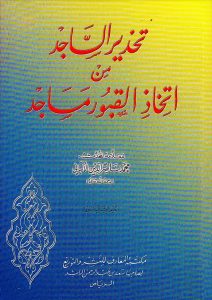
Silsilat al-Ahadith as-Sahiha — His monumental series of authentic hadiths, with commentaries, fiqh, and benefits derived from each hadith. It is a treasure for every student of knowledge.
Silsilat al-Ahadith ad-Da'ifa wa al-Mawdu'a — His complementary series of weak and fabricated hadiths, warning the Umma against inauthentic hadiths that had been spread.
Irwa' al-Ghalil fi Takhrij Ahadith Manar as-Sabil — The takhrij of the hadiths of Manar as-Sabil (a Hanbali fiqh work), considered one of his greatest works.
Sifat Salat an-Nabi (peace and blessings be upon him) (The Description of the Prophet's Prayer) — A work that has touched millions of Muslims around the world and helped them correct their prayer according to the authentic Sunna.
Sahih al-Jami' as-Saghir wa Ziyadatuh and Da'if al-Jami' as-Saghir — The classification of the hadiths of as-Suyuti's Jami' as-Saghir into authentic and weak.
Tahqiq of Mishkat al-Masabih — His critical edition and verification of at-Tibrizi's famous collection.
Sahih wa Da'if Sunan Abi Dawud, at-Tirmidhi, an-Nasa'i, and Ibn Majah — The classification of the hadiths of the four Sunan into authentic and weak.
Ahkam al-Jana'iz — On the rulings of funerals according to the Sunna.
Hijab al-Mar'a al-Muslima — On the veil of the Muslim woman.
At-Tawassul: Anwa'uhu wa Ahkamuhu — On tawassul, its types and its rulings.
And many other works on 'aqida, fiqh, takhrij, and refutation of innovations.
Awards and recognition: He received the prestigious King Faisal Prize for his remarkable contributions to the study, verification, and authentication of hadith.
His death: He died just before Maghrib on Saturday, 22 Jumada ath-Thaniya 1420 H. He left a testament asking his relatives not to lament over his death and to hasten his burial. He was buried that same evening, in accordance with his will and the Sunna. He donated his entire library, including precious manuscripts, to the library of the Islamic University of Medina, due to his "good memories" of the years he had spent there. More than five thousand people prayed over him. May Allah grant him His vast mercy and admit him into Firdaws al-A'la.
His legacy: Sheikh al-Albani (may Allah have mercy on him) is to the science of hadith in the 20th century what Imam Ahmad ibn Hanbal was to the Sunna in the third century: a renewer, a purifier, and a guardian. It is no exaggeration to say that he changed the way contemporary Muslims approach hadith. Before him, weak and fabricated hadiths circulated massively in books of fiqh, preaching, and daily practice. He devoted his entire life to separating the wheat from the chaff, to distinguishing the authentic from the weak, and to bringing Muslims back to the pure Sunna of the Prophet (peace and blessings be upon him). He was to the Sunna and hadith what Imam Muhammad ibn 'Abd al-Wahhab was to Tawhid: a mujaddid. May Allah allow us to benefit from his knowledge, may He forgive him, and may He gather us with him in Firdaws al-A'la.