Abu Bakr al-Haddad
أبو بكر الحداد
About the author
Full name: Abu Bakr ibn 'Ali ibn Muhammad al-Haddad al-Hanafi az-Zabidi.
Birth and death: He was born around 720 H in the village of 'Abbadiyya, in the valley of Zabid in Yemen, and he died in the year 800 H (1397) at the age of approximately 80, may Allah have mercy on him.
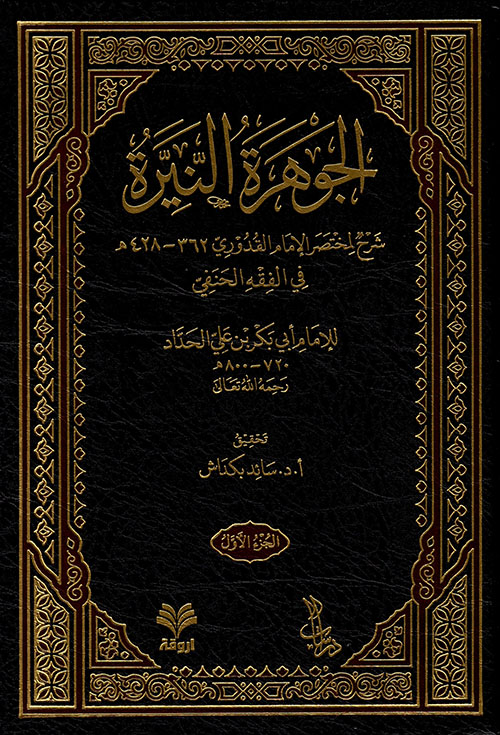
His place in the Umma: He was a great scholar and jurist, a worshipper, an ascetic, and a man of remarkable scrupulousness. He is considered the greatest Hanafi jurist that Yemen has ever known. His major work, Al-Jawhara an-Nayyira (The Resplendent Pearl), is one of the most reputed commentaries on the Mukhtasar al-Quduri, a foundational text of Hanafi fiqh that had acquired such preeminence among Hanafi scholars that it was simply called "al-Kitab" (The Book).
His education: He first studied under his father, the jurist 'Ali ibn Muhammad al-Haddad (may Allah have mercy on him), in the village of 'Abbadiyya. He then traveled to the city of Zabid where he completed his study of fiqh under the jurist 'Ali ibn Nuh and the jurist Ibrahim ibn 'Umar al-'Alawi and others. He also studied under the direction of Imam Siraj ad-Din Abu Bakr ibn 'Ali ibn Musa al-Hamili al-Hanafi (died 769 H), another great Hanafi scholar of Yemen.
His asceticism and scrupulousness: He devoted all his efforts to the fields of knowledge and action, and he was humble, ascetic in his food, drink, clothing, and in all his affairs, possessing complete scrupulousness. He is among those scholars who never sought the goods of this worldly life, but contented themselves with the strict minimum while devoting body and soul to teaching and writing. An example for every student of knowledge.
His teaching: His teaching was filled with baraka. He had many students and showed remarkable patience with them, to the point that he taught approximately 15 lessons per day, by day and by night, without ever tiring or growing bored. SubhanAllah, what dedication to the transmission of knowledge!
His works: He produced great writings in the school of Imam Abu Hanifa (may Allah have mercy on him), the likes of which none among the Hanafi scholars of Yemen had produced, from the earliest times until his era, both in their number and in their benefit. Among his works:
Al-Jawhara an-Nayyira — the small commentary on the Mukhtasar al-Quduri, and As-Siraj al-Wahhaj — the large commentary on the same work, as well as Sharh al-Manzuma an-Nasafiyya, Sharh al-Manzuma al-Hamiliyya, Sharh Qayd al-Awabid, and others still, such that his writings reach approximately 20 volumes in the Hanafi school.
His Jawhara an-Nayyira is particularly appreciated for its clarity and conciseness: it explains the legal rules of the Mukhtasar al-Quduri by linking them to their sources in the Quran, the Sunna, and the opinions of the early Hanafi jurists, without straying from the intended meaning.
His death: He died in the year 800 H and was buried at the Bab al-Qurtub cemetery in the city of Zabid. He had lost his sight shortly before his death, but this in no way diminished his greatness. May Allah grant him His vast mercy and admit him into Firdaws al-A'la.
His legacy: Imam Abu Bakr al-Haddad remains a central figure of Hanafi fiqh in Yemen. His Jawhara an-Nayyira continues to be studied and edited throughout the Muslim world as one of the best commentaries on the Mukhtasar al-Quduri. He embodies the ideal of the humble and devoted scholar: a man who devoted every moment of his life to knowledge, teaching, and the worship of Allah, far from the honors and comforts of this worldly life.