Ibn al-Mundhir
ابن المنذر
About the author
Full name: Abu Bakr Muhammad ibn Ibrahim ibn al-Mundhir ibn al-Jarud an-Naysaburi.
Birth and death: He was born around 242 H (856) in Naysabur (Nishapur, in present-day Iran) — adh-Dhahabi estimates his birth around the time of Imam Ahmad ibn Hanbal's death — and he died around 318-319 H (930-931) in Mecca. May Allah have mercy on him.
His place in the Umma: He was an imam, a mujtahid, a muhaddith, and a mufassir, and one of the greatest scholars in the field of ikhtilaf (scholarly disagreements) in the third Hijri century. Adh-Dhahabi said of him: "The uniquely distinguished scholar of hadith and fiqh, the Sheikh of the Haram, the one who composed works the like of which have never been written." An-Nawawi said of him: "The famous imam and one of the imams of Islam. All have agreed that he was an imam, virtuous and extremely knowledgeable in hadith and fiqh... He is at the highest degree of knowledge regarding the authenticity of hadiths."
His origins and career: He was born in Naysabur and most likely studied under the numerous scholars of that city from a young age. He was a student of the Shafi'i imam ar-Rabi' ibn Sulayman, who was himself a direct student of Imam ash-Shafi'i (may Allah have mercy on him). He then traveled in pursuit of knowledge, as was the practice of the scholars of his era, although the details of all his travels have not reached us.
His rank in fiqh — A mujtahid mutlaq: Although he studied in the Shafi'i tradition, he reached the rank of absolute ijtihad (mujtahid mutlaq) and did not limit himself to following any particular school, even though he most often followed the positions of Imam ash-Shafi'i. His writings demonstrate that there existed in his time scholars who, despite having an affiliation with certain nascent traditions, equaled or even surpassed their contemporaries through an elevated degree of juridical sophistication. This is why his positions are cited as an independent reference in works of comparative fiqh.
His methodology: He placed the Quran as the fundamental source of Islamic law, complemented by rigorously authenticated hadiths and consensus (ijma'). He classified opinions in chronological order, beginning with the positions of the Companions, and evaluated each position with rigor. His approach reflects a remarkable balance between independent reasoning and fidelity to the texts.
His settlement in Mecca: He eventually settled in Mecca and became the Sheikh of the Haram (the Sacred Mosque), holding the title of Imam al-Haram. What an immense honor Allah granted him: to teach and issue fatwas in the most sacred place on earth, near the Ka'ba.
His works: He wrote abundantly — more than twenty-seven works are attributed to him, though many have been lost. Among those that have reached us:
Al-Awsat fi as-Sunan wa al-Ijma' wa al-Ikhtilaf — His most detailed and most monumental work. It is an encyclopedia of comparative fiqh in which he presents the opinions of the Companions, the Tabi'in, and the imams on each question, with the evidence of each, then gives his own view based on ijtihad. It is one of the richest works ever written in the field of ikhtilaf.
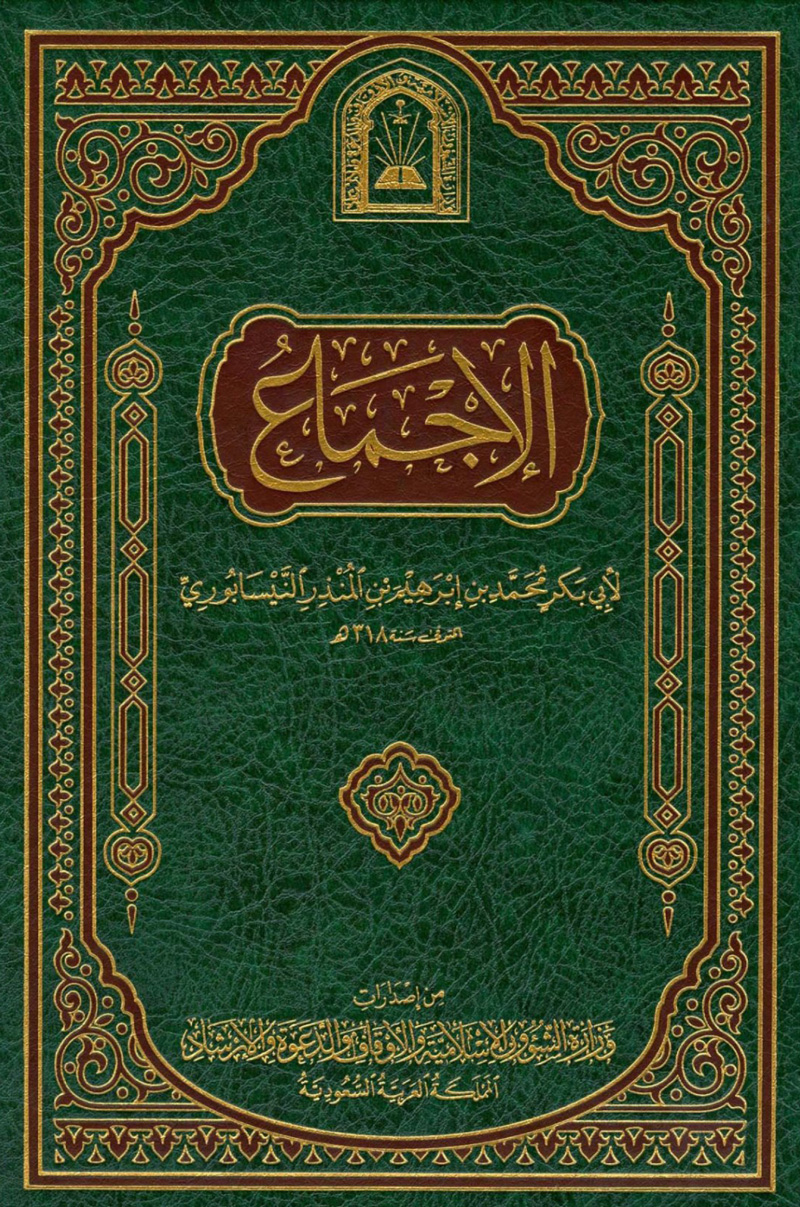
Al-Ijma' — A unique work of its kind, in which he catalogues the questions of fiqh on which scholars are unanimous. An-Nawawi said in Al-Majmu': "Everything I cite from the book Al-Ijma' of Ibn al-Mundhir is a model of excellence in this science." Ibn Qudama in Al-Mughni, Ibn Hajar, al-Qurtubi, and Ibn Rushd in Bidayat al-Mujtahid cited this work abundantly.
Al-Ishraf 'ala Madhahib Ahl al-'Ilm — A synthetic work on the schools of thought of the scholars.
Al-Iqna' — A work of fiqh.
Kitab Tafsir al-Quran — His tafsir of the Quran, testifying to his mastery of the Quranic sciences in addition to fiqh and hadith.
His influence on later generations: Scholars such as Ibn Hazm and Ibn Qudama abundantly referenced Ibn al-Mundhir's methodologies and opinions, particularly in discussions of juridical disagreements, which testifies to his lasting influence on the development of this genre of juridical writing. It is impossible to read a work of comparative fiqh without encountering his name in every chapter.
His death: He died around 318-319 H in Mecca, within the precinct of the Haram, after a life devoted to knowledge and teaching near the House of Allah. May Allah grant him His vast mercy and admit him into Firdaws al-A'la.
His legacy: Imam Ibn al-Mundhir is one of those scholars whose stature transcends the boundaries of the madhahib. He is neither "Hanafi" nor "Maliki" nor "Shafi'i" nor "Hanbali" in the strict sense: he is a mujtahid whose opinions are cited by all the madhahib as an independent reference. His Ijma' remains the reference par excellence in that field, and his Awsat is a treasure for anyone who wishes to understand the disagreements among scholars with depth and fairness. Although he has not received in modern research all the attention he deserves, he was very highly esteemed by his contemporaries and biographers. He is a scholar that every student of knowledge should know and whose works should be studied.