Malik Ibn Anas
مالك بن أنس
About the author
Full name: Abu 'Abd Allah Malik ibn Anas ibn Malik ibn Abi 'Amir ibn 'Amr ibn al-Harith al-Asbahi al-Madani.
Birth and death: He was born in 93 H (711) in Medina. He died on 14 Rabi' al-Awwal 179 H (795) in Medina, in the same city where he was born, had lived, and taught his entire life, may Allah have mercy on him. He was buried at Jannat al-Baqi', the sacred cemetery beside the Mosque of the Prophet (peace and blessings be upon him), where many Companions rest.
His place in the Ummah: He is Imam Dar al-Hijra (the imam of the Abode of Emigration), a title that no other has borne. Imam ash-Shafi'i (may Allah have mercy on him), who was his student for nine years, said: "When the scholars are mentioned, Malik is the star." The Prophet (peace and blessings be upon him) reportedly said according to a hadith narrated by at-Tirmidhi: "Soon the people will beat the flanks of their camels in search of knowledge, and they will find no one more knowledgeable than the scholar of Medina." The scholars consider that the scholar intended by this hadith is Malik ibn Anas.
His origins: His family was originally from Yemen, but his grandfather had emigrated to Medina during the reign of 'Umar ibn al-Khattab (may Allah be pleased with him). His great-grandfather Abu 'Amir was a Companion who participated in all the battles of the Prophet (peace and blessings be upon him) except Badr. His father and grandfather had studied the religious sciences under the Companions of the Prophet (peace and blessings be upon him) who still resided in Medina.
His education: Growing up in Medina meant growing up in the city of the Prophet (peace and blessings be upon him), among the descendants of the Companions and the Tabi'in. He memorized the Quran in his youth and learned recitation from Abu Suhayl Nafi' ibn 'Abd ar-Rahman, from whom he also received his ijaza. He studied under illustrious scholars, including Hisham ibn 'Urwa, Ibn Shihab az-Zuhri, and Imam Ja'far as-Sadiq, but he was especially influenced by Imam Nafi' mawla Ibn 'Umar, the famous Tabi'i and freed slave of 'Abd Allah ibn 'Umar (may Allah be pleased with them). He contacted approximately 900 scholars for the collection of hadiths.
His chain of transmission — Malik, from Nafi', from Ibn 'Umar, from the Prophet (peace and blessings be upon him) — is called Silsilat adh-Dhahab (the Golden Chain), considered by hadith scholars, including Imam al-Bukhari, as the most authentic chain there is.
His methodology: Imam Malik founded his jurisprudence on the Quran, the Sunna, consensus (ijma'), analogical reasoning (qiyas), and a source particular to him: the 'amal of the People of Medina (the continuous practice of the inhabitants of Medina), which he considered a living transmission of the Sunna of the Prophet (peace and blessings be upon him), since Medina was the city where the Prophet (peace and blessings be upon him) had lived, taught, and applied Islam.
His scrupulousness in issuing fatwas: Imam Malik said: "The shield of the scholar is 'I do not know'; if he neglects it, he will be attacked." He was known for refusing to answer a question if he did not possess a certainty grounded in the texts, and he often sent the questioner away saying "la adri" (I do not know). What a lesson for the scholars of our era!
He also said this fundamental statement that every Muslim should engrave in his heart: "The statement of every man can be accepted or rejected, except that of the occupant of this tomb (peace and blessings be upon him)." — pointing toward the tomb of the Prophet (peace and blessings be upon him).
His teaching in the Mosque of the Prophet (peace and blessings be upon him): He sat on the minbar of the mosque of the Prophet (peace and blessings be upon him) with the Quran in one hand and a collection of hadiths in the other, and offered juridical opinions based on these two sources. His gatherings were marked by dignity, respect, and seriousness. When someone asked a question, complete silence reigned, and Imam Malik responded in such a controlled manner that one could not tell where the answer came from. He taught hadith and fiqh for 62 years. Students came from the entire Muslim world to study under him: from Medina, Mecca, Yemen, Syria, Iraq, Khorasan, Transoxiana, and North Africa.
His courage before power: Despite his rank, he was never an instrument of the rulers. When the caliph al-Mansur tried to force people to accept a juridical opinion on divorce, Imam Malik opposed it on the basis of an authentic hadith. As punishment, the governor of Medina had him publicly flogged until his arms were dislocated. But the imam never changed his fatwa. He said: "I do not give fatwas to please kings. I give fatwas to please Allah."
His wisdom regarding the unification of the madhhabs: When the caliph al-Mansur proposed imposing the Muwatta' as the sole law over the entire Muslim world, Imam Malik refused, saying that the Companions of the Prophet (peace and blessings be upon him) had dispersed to different lands and each people followed what had reached them. He considered the divergences among scholars as a mercy from Allah for the Ummah. Even the caliph Harun ar-Rashid attempted the same thing, and Imam Malik refused again. SubhanAllah, what selflessness and wisdom!
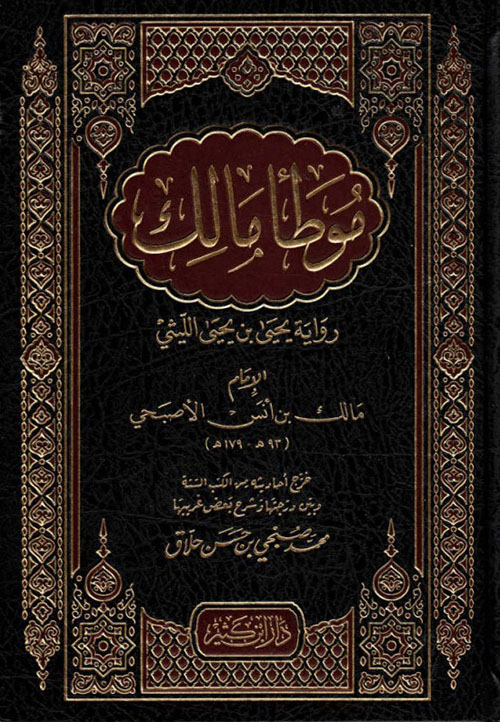
His masterwork — Al-Muwatta': Imam Malik spent more than 40 years compiling it, carefully selecting hadiths and juridical opinions. It contains approximately 1,720 hadiths, as well as the opinions of the Companions, the Tabi'in, and the personal reasoning of Imam Malik. Imam ash-Shafi'i said: "There is no book on earth after the Book of Allah that is more authentic than the Muwatta' of Imam Malik." It is one of the oldest and most venerated Sunni hadith collections and one of the very first works of Muslim law to have come down to us. More than a thousand disciples of Malik transmitted it from him during his lifetime, giving rise to different recensions (riwayat), the most famous of which is that of Yahya ibn Yahya al-Laythi.
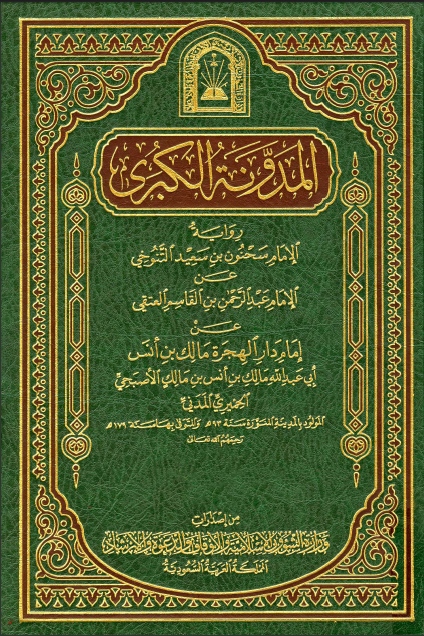
His students: Among his most illustrious students: Imam ash-Shafi'i (may Allah have mercy on him), who studied under him for nine years and became the founder of the third school of fiqh; 'Abd ar-Rahman ibn al-Qasim, the great Egyptian jurist whose positions are at the heart of the Mudawwana; Yahya ibn Yahya al-Laythi, who transmitted the most famous version of the Muwatta' in al-Andalus; and many other scholars from all parts of the Muslim world.
His death: He fell ill on a Sunday and, after 28 days of suffering, he died on 10 (or 14) Rabi' al-Awwal 179 H at the age of approximately 84-87. The emir of Medina, 'Abd al-'Aziz ibn Muhammad ibn Ibrahim, led his funeral prayer. An immense crowd gathered for his funeral, of an unprecedented magnitude since the deaths of Abu Bakr and 'Umar (may Allah be pleased with them). May Allah grant him His vast mercy and admit him into Firdaws al-A'la.
His legacy: Imam Malik (may Allah have mercy on him) is one of the greatest scholars this Ummah has ever known. He lived, taught, and died in the city of the Prophet (peace and blessings be upon him), and his entire life was a living prolongation of the Sunna of Medina. His school became the norm for Sunni practice in a large part of North Africa, al-Andalus, a vast portion of Egypt, parts of Syria, Yemen, Sudan, Iraq, and Khorasan. His Muwatta' remains the first book every Maliki student studies after the Quran. And his statement — "The statement of every man can be accepted or rejected, except that of the occupant of this tomb (peace and blessings be upon him)" — is the fundamental principle that guides every Muslim in his search for truth.