Ibn Hajar Al-Asqalani
ابن حجر العسقلاني
About the author
Full name: Shihab ad-Din Abu al-Fadl Ahmad ibn 'Ali ibn Muhammad ibn Muhammad ibn Ahmad al-Kinani al-'Asqalani ash-Shafi'i.
Birth and death: He was born on 12 Sha'ban 773 H (18 February 1372) in Egypt. He died after the 'Isha' prayer on Saturday 8 Dhu al-Hijja 852 H (2 February 1449) in Cairo, may Allah have mercy on him.
His place in the Ummah: He is the classical scholar "whose lifelong work constitutes the final synthesis of the science of hadith." He bears the highest titles that the Ummah can bestow upon a hadith scholar: Hafiz al-'Asr (the Hafiz of his era), Shaykh al-Islam, and Amir al-Mu'minin fi al-Hadith (the Commander of the Believers in hadith). Sheikh al-Albani (may Allah have mercy on him) said of him: "Ibn Hajar was the strongest of those among the scholars who had memorized hadith."
His origins: His family was originally from the region of Qabis in Tunisia. Some members had settled in Palestine — hence the name "al-'Asqalani" (from Ascalon, in Palestine) — before fleeing the threat of the Crusaders. His father, 'Ali ibn Muhammad, was himself a Shafi'i scholar and poet who knew the seven canonical readings of the Quran. Both his parents died in his childhood, and he became an orphan by the age of four. SubhanAllah, from this orphan, Allah made the greatest muhaddith of his era.
His prodigious youth: His guardian, Zaki ad-Din al-Kharrubi, enrolled him in Quranic studies at the age of five. He excelled, learning Surah Maryam in a single day and memorizing the entire Quran by the age of nine. He then memorized classical texts such as the Mukhtasar of Ibn al-Hajib in usul al-fiqh, the Hawi, and the 'Umdat al-Ahkam. At only twelve years of age, he led the Tarawih prayer in Mecca in 785 H, testifying to the maturity and precision of his memory.
His education: His teachers exceeded eight hundred. He studied hadith for ten years under the great hafiz Zayn ad-Din al-'Iraqi (may Allah have mercy on him), one of the highest hadith authorities of his time. He studied Shafi'i fiqh under al-Bulqini and Ibn al-Mulaqqin, and the Arabic language under al-Majd al-Fayruzabadi (the author of the famous dictionary Al-Qamus al-Muhit). He traveled to Damascus, Jerusalem, Mecca, Medina, and Yemen to study under the greatest scholars.
His exceptional memory: Due to his quick comprehension and powerful memory, he could follow and correct texts being read to him while he was writing something else. SubhanAllah, this illustrates the extraordinary gift that Allah had granted him.
His positions: He became the Chief Qadi of Egypt, then Syria was added to his jurisdiction, a post he held for over twenty-one years. He taught at al-Azhar, the mosque of 'Amr, and other places. The most eminent scholars, including his own teachers and contemporaries, sought his books.
His works: He wrote approximately 150 works covering hadith, the sciences of hadith, biographical critique of transmitters, history, tafsir, poetry, and Shafi'i fiqh. Among the most famous:
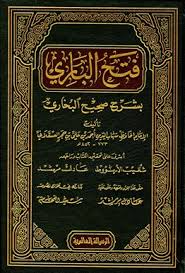
Fath al-Bari bi Sharh Sahih al-Bukhari — The crowning achievement of his career and the jewel of all sharh al-hadith literature. He began it in 817 H, after completing his introduction (Hady as-Sari) in 813 H, and finished the entire commentary in Rajab 842 H — over twenty-five years of work. When it was completed, a great celebration was organized near Cairo, in the presence of scholars, judges, and the most eminent personalities of Egypt. Ibn Hajar read the final pages of his work, then poets recited eulogies and gold was distributed. The historian Ibn Iyas said it was "the greatest celebration of the era in Egypt." Foreign kings, such as the son of Timur, Shahrukh, and the sultan of Morocco, requested copies of the work even before it was finished. This book remains to this day the most famous and most appreciated commentary on Sahih al-Bukhari.
Hady as-Sari — The monumental introduction to Fath al-Bari, a work in itself, in which he treats the biography of al-Bukhari, his methodology, contested transmitters, and fundamental questions related to the Sahih.
Bulugh al-Maram min Adillat al-Ahkam — A concise collection of hadiths used as juridical proofs, classified by fiqh chapters. This book has become one of the most studied texts in the Muslim world for evidence-based fiqh.
Tahdhib at-Tahdhib — His monumental work of biographical critique of hadith transmitters in the six great collections (al-Kutub as-Sitta), based on the Tahdhib al-Kamal of al-Mizzi.
Taqrib at-Tahdhib — A summary of the preceding, where he gives for each transmitter a brief and synthetic judgment.
Lisan al-Mizan — A reworking of the Mizan al-I'tidal of adh-Dhahabi on criticized transmitters.
Al-Isaba fi Tamyiz as-Sahaba — The most comprehensive dictionary of the Companions of the Prophet (peace and blessings be upon him).
Ad-Durar al-Kamina — A biographical work on the personalities of the eighth century of the Hijra.
Nukhbat al-Fikar fi Mustalah Ahl al-Athar — A concise and foundational text in the sciences of hadith (mustalah al-hadith), of which he himself composed the commentary (Nuzhat an-Nazar). These two texts are among the first studied by students of hadith sciences worldwide.
Badhl al-Ma'un fi Akhbar at-Ta'un — A work on the Black Plague, containing meditations on illness and the divine decree.
And many other works of tafsir, fiqh, history, and poetry.
His character: He was humble, tolerant, patient, and enduring. He was described as constant, prudent, ascetic, generous, spending in charity, and assiduous in supererogatory prayer and fasting. He was kind toward those who wronged him and forgave those he had the power to punish. An entire life of proximity to the hadith of the Prophet (peace and blessings be upon him) had imbued his heart with a profound love for the Messenger of Allah (peace and blessings be upon him), as testified by his poetry compiled in his Diwan.
Note on his 'aqida: In all honesty, it should be mentioned that Imam Ibn Hajar (may Allah have mercy on him) followed the Ash'ari path in matters of 'aqida, and this is found in certain passages of Fath al-Bari where he makes ta'wil of certain Divine Attributes. Scholars such as Imam Ibn Baz (may Allah have mercy on him) annotated Fath al-Bari to correct these points and clarify the position of the Salaf as-Salih. This in no way diminishes the immense value of his work in hadith, and the wise Muslim takes the benefit of his colossal knowledge while following the path of the Salaf in matters of 'aqida.
His death: His funeral was attended by "fifty thousand people," including the sultan and the caliph; "even the Christians were in mourning." May Allah grant him His vast mercy and admit him into Firdaws al-A'la.
His legacy: Imam Ibn Hajar al-'Asqalani is, without exaggeration, the greatest muhaddith of the second half of Islamic history. His Fath al-Bari is a work that no student of knowledge can do without. His Bulugh al-Maram is recited and studied in mosques and madrasas worldwide. His works of jarh wa ta'dil (Tahdhib at-Tahdhib, Taqrib at-Tahdhib, Lisan al-Mizan) are the daily working tools of every hadith researcher. And his Nukhba with its Nuzha are the entry point for every student into the sciences of hadith. May Allah let us benefit from his knowledge and gather us with him and with the Prophet (peace and blessings be upon him) in Firdaws al-A'la.