Al-Tahawi
الطحاوي
About the author
Full name: Abu Ja'far Ahmad ibn Muhammad ibn Salama ibn Salma al-Azdi al-Hajri at-Tahawi al-Misri al-Hanafi.
Birth and death: He was born in the village of Taha, in Upper Egypt. His ancestors came from Yemen to Egypt and settled there after the Muslim conquest. Opinions differ on the exact date of his birth: 229, 230, 238, or 239 H. As-Sam'ani states that he was born in 229 H (843), and this is the correct date. He died on 14 Dhu al-Qa'da 321 H (5 November 933) and was buried in the cemetery of al-Qarafa in Cairo. May Allah have mercy on him. He was buried in the same cemetery as Imam ash-Shafi'i (may Allah have mercy on him) — the nephew near the spiritual uncle.
His place in the Ummah: Imam an-Nawawi called him "the imam of the Hanafis in hadith." According to Abu Ishaq ash-Shirazi, he was the last great master of Hanafi fiqh in Egypt. Ibn Yunus said: "At-Tahawi was trustworthy, sincere, a faqih, a man of intelligence; after him there was no one like him." Adh-Dhahabi described him as "the faqih, the muhaddith, the hafiz, one of the eminent scholars; he was trustworthy, sincere, a faqih, and a man of wisdom." Ibn Kathir said: "He was one of the trustworthy transmitters, sincere, and one of the huffaz."
He lived in an era when the direct and indirect disciples of the four imams of fiqh — Abu Hanifa, Malik, ash-Shafi'i, and Ahmad ibn Hanbal — were still teaching and practicing. Al-Badr al-'Ayni wrote: when Imam Ahmad died, at-Tahawi was 12 years old; when Imam al-Bukhari died, he was 27; when Imam Muslim died, he was 32; when Imam Ibn Maja died, he was 44; when Imam Abu Dawud died, he was 46; when Imam at-Tirmidhi died, he was 50; and when Imam an-Nasa'i died, he was 74. SubhanAllah, he lived during the golden age of hadith science and benefited from the presence of all these giants.
His family and context: His grandfather served as an army commander, and his father devoted himself to poetry and literature. At-Tahawi even consulted his father's expertise to verify lines of poetry in his work Sharh Ma'ani al-Athar. His mother attended the scholarly circles of Imam ash-Shafi'i. Being raised in a family where the mother herself was a woman of knowledge testifies to the exceptional environment in which the imam grew up.
A remarkable detail: his mother was a disciple of Imam ash-Shafi'i, and his maternal uncle al-Muzani was the most famous disciple of ash-Shafi'i. At-Tahawi therefore began his studies in the Shafi'i madhhab.
His change of madhhab: He studied with his uncle al-Muzani and was a Shafi'i jurist before moving to the Hanafi school. In 259 H (873), at about 20 years of age, at-Tahawi abandoned the Shafi'i madhhab in favor of the Hanafi madhhab. Different versions are given by his biographers for his conversion, but the most probable reason seems to be that the system of Abu Hanifa attracted his critical acumen more than that of ash-Shafi'i.
According to another version, when he saw his uncle al-Muzani turn to the fiqh of Abu Hanifa to resolve difficult questions — particularly the works of Muhammad ibn al-Hasan ash-Shaybani and Abu Yusuf — Imam at-Tahawi was instinctively drawn to the Hanafi madhhab.
His education: After leaving the Shafi'i school, he studied under the authority of the head of the Hanafis in Egypt, Sheikh Abu Ja'far Ahmad ibn Abi 'Imran — the Qadi al-qudat of Egypt — who had himself studied under the two principal students of Abu Hanifa: Abu Yusuf and Muhammad ash-Shaybani. Then Imam at-Tahawi traveled to Syria in 882 CE to deepen his studies, and there studied under the authority of the Qadi al-qudat of Damascus, Abu Khazim 'Abd al-Hamid ibn Ja'far al-Hanafi.
It is reported that he mentioned the number of his sheikhs as three hundred.
His methodology: He was truly a mujtahid capable of pronouncing on all matters and was perfectly familiar with the fiqh of the four schools, as Ibn 'Abd al-Barr indicates, and as demonstrated by his own work of comparative fiqh entitled Ikhtilaf al-Fuqaha'.
His 'aqida: Imam at-Tahawi is one of the greatest defenders of the 'aqida of Ahl as-Sunna wa al-Jama'a. In his famous treatise, he gathered the 'aqida of Ahl as-Sunna according to the path of the three great Hanafi imams — Abu Hanifa, Abu Yusuf, and Muhammad ibn al-Hasan ash-Shaybani (may Allah have mercy on them). His 'aqida is a masterful synthesis that affirms tawhid, the Attributes of Allah without tashbih and without ta'til, the reality of qadar, the vision of Allah in the Hereafter, the uncreatedness of the Quran, and refutes the deviant sects such as the Mu'tazila, the Jahmiyya, the Qadariyya, and the Jabariyya.
His works: Imam at-Tahawi (may Allah have mercy on him) is the author of approximately forty works. Among the most famous:
Al-'Aqida at-Tahawiyya (also entitled Bayan as-Sunna wa al-Jama'a) — His treatise on 'aqida, undoubtedly one of the most famous and most taught creedal texts in all the history of Sunni Islam. Despite its small size, it is a foundational text for all times, enumerating what a Muslim must know, believe, and understand inwardly. There is consensus among the Companions, the Successors, and all the great Islamic authorities — including the four imams and their authorized disciples — on the doctrines enumerated in this work, which are entirely derived from the indisputable primary sources of the religion: the Quran and the authentic hadith.
More than fifteen commentaries have been written on this 'Aqida. The most famous and most widely read in Sunni circles is the Sharh al-'Aqida at-Tahawiyya of Ibn Abi al-'Izz al-Hanafi (died 792 H) — a masterful commentary that explains each phrase of Imam at-Tahawi in the light of the methodology of the Salaf and the positions of Ibn Taymiyya and Ibn al-Qayyim. Other modern commentaries include those of Sheikhs Ibn Baz, al-Albani, and many other contemporary scholars (may Allah have mercy on them).
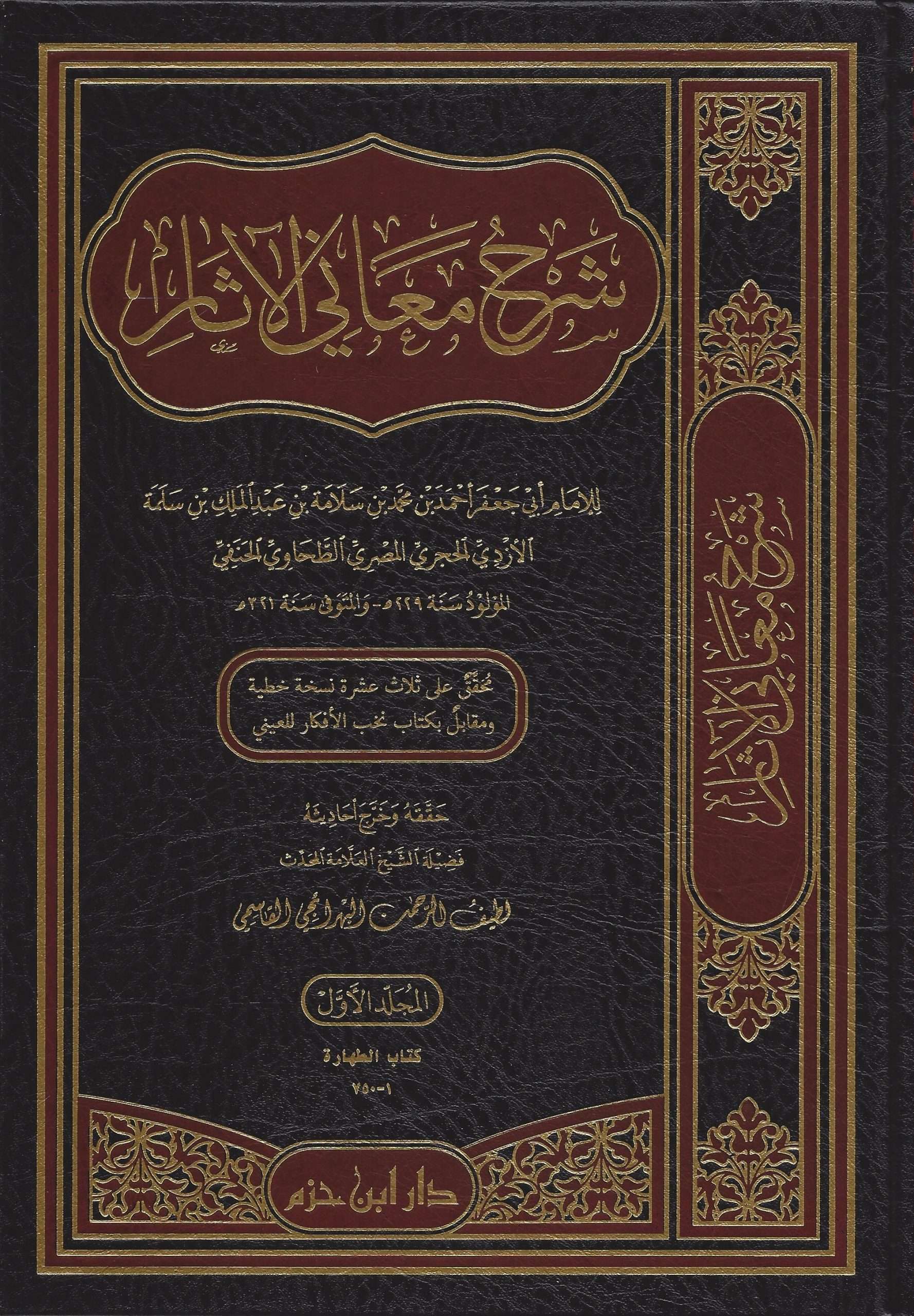
Sharh Ma'ani al-Athar (The Commentary on the Meanings of the Traditions) — One of his monumental works in hadith and comparative fiqh. This encyclopedic work has long been considered indispensable for the training of students in fiqh.
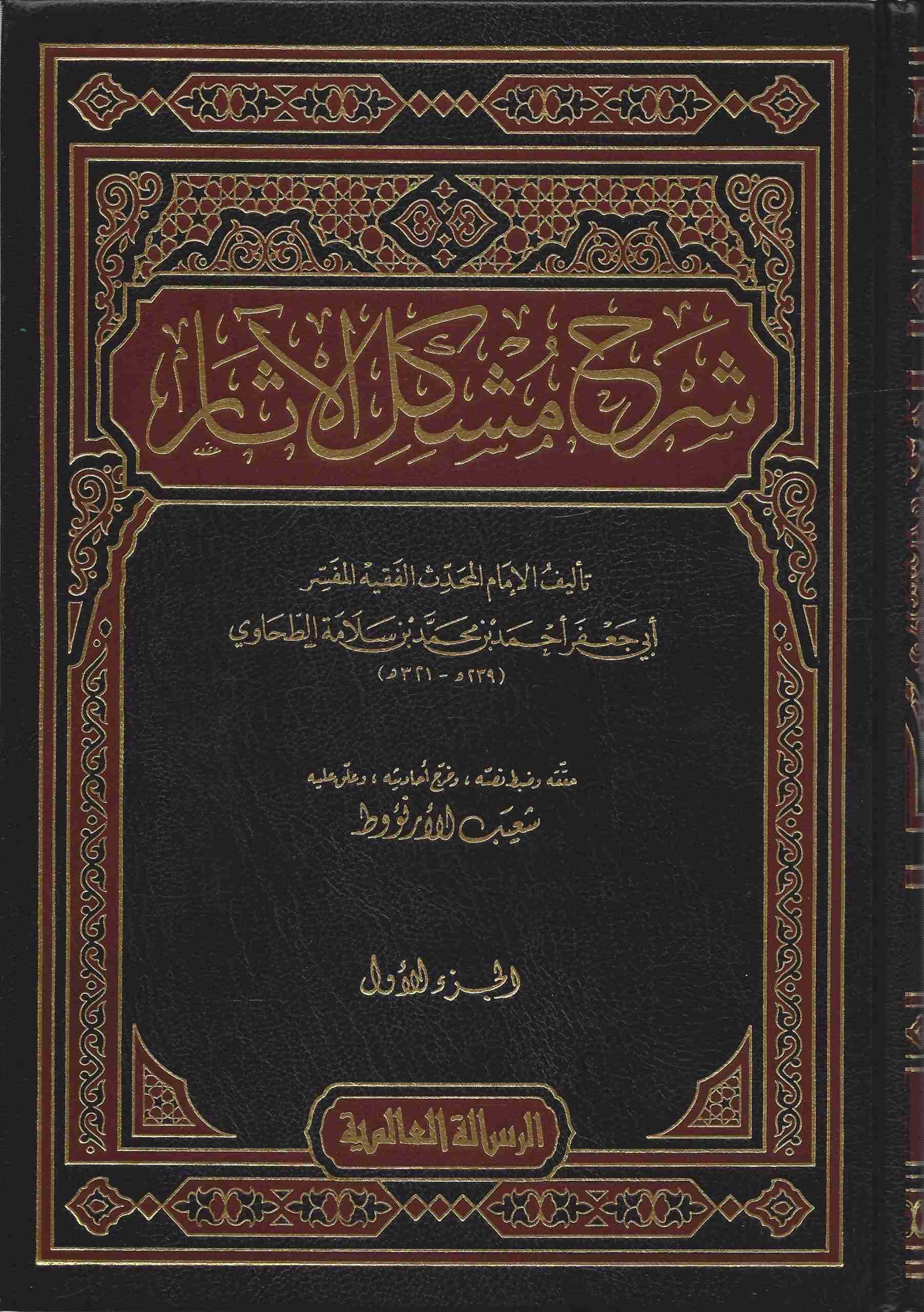
Sharh Mushkil al-Athar (The Commentary on Problematic Traditions) — An immense work that treats apparently contradictory hadiths and shows how to reconcile them — in the lineage of Ta'wil Mukhtalif al-Hadith of Ibn Qutayba but with a more rigorous and more extensive methodology.
Ahkam al-Qur'an al-Karim — The rulings drawn from the Quran.
Mukhtasar at-Tahawi (also known as al-Mukhtasar fi al-Furu') — An abridgment of Hanafi fiqh that became a reference text of the madhhab for centuries, commented on by many later Hanafi scholars, including al-Jassas and al-Isbijabi.
Ikhtilaf al-Fuqaha' / Ikhtilaf al-'Ulama' — His work of comparative fiqh, fundamental in the history of khilaf.
Sharh al-Jami' al-Kabir and Sharh al-Jami' as-Saghir — His commentaries on the two great works of Muhammad ibn al-Hasan ash-Shaybani.
Ash-Shurut as-Saghir and ash-Shurut al-Kabir — Two works on written legal instruments (contracts, legal documents), demonstrating his mastery of applied law.
'Uqud al-Marjan fi Manaqib Abi Hanifa an-Nu'man — A work on the virtues of Imam Abu Hanifa.
His death: He died on 14 Dhu al-Qa'da 321 H in Cairo and was buried in the cemetery of al-Qarafa (Cairo's "city of the dead"), not far from the tomb of Imam ash-Shafi'i. May Allah grant him His vast mercy and admit him into Firdaws al-A'la.
His legacy: Imam at-Tahawi (may Allah have mercy on him) is one of the major figures of classical Sunni Islam. His 'Aqida at-Tahawiyya is today the most memorized, most commented, and most studied 'aqida text in the Sunni world — from Turkey to South Asia, through Egypt, the Maghreb, and sub-Saharan Africa. All the scholars of Ahl as-Sunna, regardless of their school, have recognized its fundamental value for expounding the principles of the orthodox creed. His Sharh Ma'ani al-Athar and his Mushkil al-Athar are indispensable references in fiqh al-hadith. His Mukhtasar was one of the founding texts of the classical Hanafi madhhab. And through his training in two madhhabs (Shafi'i then Hanafi), his mastery of all four schools, his rigor in hadith, and his firmness in 'aqida, he embodies the accomplished Sunni scholar par excellence. May Allah let us benefit from his knowledge and gather us with him in Firdaws al-A'la.