Ibrahim al-Halabi
إبراهيم الحلبي
About the author
Full name: Burhan ad-Din Ibrahim ibn Muhammad ibn Ibrahim al-Halabi.
Birth and death: He was born around 860 H (1460) in Aleppo (Halab), in the Mamluk Sultanate, and he died in 956 H (1549) in Istanbul, may Allah have mercy on him. His life spanned over 90 years devoted to scholarship and teaching.
His place in the Umma: The Austrian historian and diplomat Hammer-Purgstall included him among the ten greatest jurists of the sixteenth century, the golden age of the Ottoman Empire. He is considered one of the most brilliant Hanafi jurists of his era, and his major work, the Multaqa al-Abhur, became the official reference text of Hanafi fiqh throughout the Ottoman Empire for three centuries.
His education: He first studied under the local scholars of Aleppo, his hometown. Then, at the end of the fifteenth century, he traveled to Cairo, the capital of the Mamluk Sultanate, where he likely studied at al-Azhar, which offered a curriculum in Hanafi jurisprudence. He also studied under the famous scholar Jalal ad-Din as-Suyuti (died 1505), the great muhaddith and mufassir. He studied hadith, tafsir, usul, and fiqh under eminent scholars. It is noteworthy that he later refuted as-Suyuti on some of his positions, particularly concerning his defense of Ibn 'Arabi, thus demonstrating his intellectual independence and commitment to truth.
His settlement in Istanbul: Around the year 1500, al-Halabi settled in Istanbul, capital of the Ottoman Empire. His qualifications were quickly recognized, and he held the positions of imam and khatib in several mosques, until being appointed to the same functions in the prestigious Mosque of Sultan al-Fatih. He was also designated as a teacher in the new Dar al-Qurra' founded by the Sheikh al-Islam Sa'di Chelebi. He was authorized to issue official fatwas alongside the principal muftis of the Ottoman Empire, and the supreme mufti consulted him on complex questions.
His scholarship: He mastered Arabic, tafsir, hadith, qira'at, fiqh, and usul, with an excellent retention of the furu' (detailed branches) of Hanafi fiqh.
His major works:
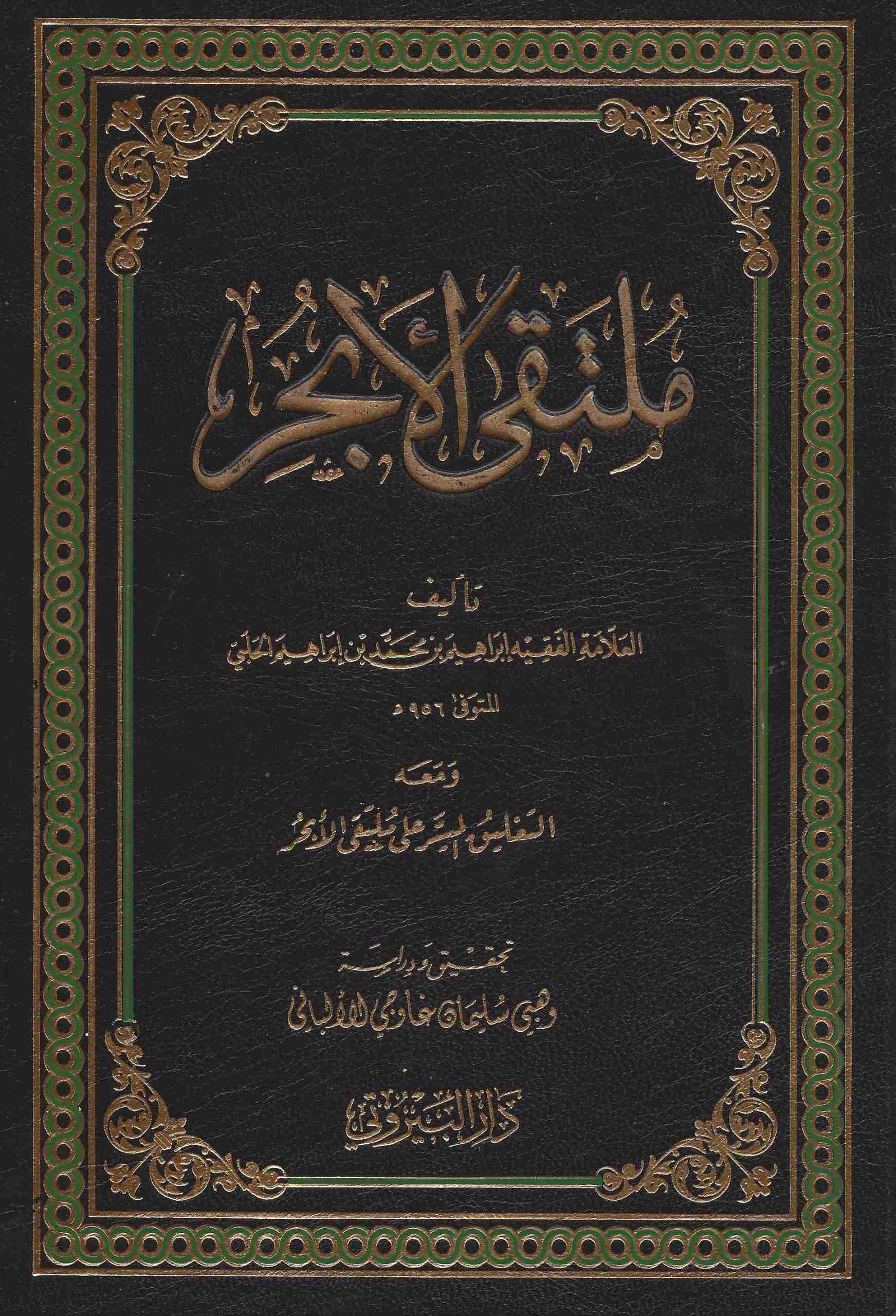
Multaqa al-Abhur (The Confluence of the Seas) — His masterpiece and one of the most influential works in all of Hanafi fiqh history. This text synthesizes with remarkable clarity and precision the content of the four principal mutun (foundational texts) of Hanafi fiqh: the Mukhtasar of al-Quduri, the Mukhtar of al-Mawsili, the Kanz ad-Daqa'iq of an-Nasafi, and the Wiqaya. Under the reign of Sultan Sulayman al-Qanuni (the Magnificent), the Multaqa replaced the Kanz ad-Daqa'iq as the standard manual in Ottoman madrasas and maintained this preeminence for three centuries. A European observer of the time remarked: "The Sultan rules over the Turks, but the Quran and the Multaqa rule over the Sultan." The Ottoman civil code, the Majalla, promulgated in 1877, incorporates more passages translated directly from the Multaqa than from any other source.
Gunyat al-Mutamalli — Known in Turkish as Halabi-yi Kabir (the Great Halabi), it is a detailed commentary on the Munyat al-Musalli concerning the rules of prayer. He also wrote an abridged version, the Halabi Saghir (the Small Halabi). These two works became very widespread manuals for teaching prayer in the Ottoman world.
Tasfih al-Ghabi fi Tanzih Ibn 'Arabi and Ni'mat adh-Dhariya fi Nusrat ash-Shari'a — Two polemical works in which he refuted the doctrine of wahdat al-wujud (unity of existence) of Ibn 'Arabi, which he considered as exceeding the limits of the Shari'a and the Sunna. He had a great influence on the more critical position that Ottoman 'ulama subsequently adopted toward Ibn 'Arabi.
He also wrote a Mukhtasar al-Jawahir al-Mudiyya on the tabaqat (biographies) of Hanafi scholars, a versified biography of the Prophet (peace and blessings be upon him) in 63 verses with his own commentary, as well as Al-Hilya ash-Sharifa on the virtues of the Prophet (peace and blessings be upon him), based primarily on the Kitab ash-Shifa' of Qadi 'Iyad.
His character: He was a courageous scholar who did not fear taking positions against practices he considered innovations, even in the face of pressure from his contemporaries. He notably refuted the practice of qiyam (standing) upon the mention of the birth of the Prophet (peace and blessings be upon him) in mawlid assemblies, considering it without foundation in the Shari'a, despite the criticisms and reproaches he received.
His death: He died in 956 H (1549) in Istanbul, after more than forty years spent in this city in the service of scholarship and teaching. May Allah grant him His vast mercy and admit him into Firdaws al-A'la.
His legacy: Imam al-Halabi remains one of the greatest jurists of the Ottoman era. His Multaqa al-Abhur is a monument of Hanafi fiqh that shaped the legal system of one of the vastest empires in the history of Islam. His courage in defending the Sunna against innovations and doctrinal deviations makes him an example for students of knowledge. He embodies the rigor of the jurist, fidelity to the school, and the independence of a scholar who seeks only the truth.