Fakhr al-Zayla'i
الفخر الزيلعي
About the author
Full name: Fakhr ad-Din 'Uthman ibn 'Ali ibn Mihjan al-Bari'i az-Zayla'i al-Hanafi.
Important note: He must be distinguished from his contemporary Jamal ad-Din az-Zayla'i (d. 762 H), the famous muhaddith author of Nasb ar-Raya (the work of takhrij of the hadiths of al-Hidaya of al-Marghinani). The two bear the same nisba "az-Zayla'i" but are distinct scholars, and many people confuse them.
He is not to be confused with Jamal ad-Din az-Zayla'i.
Birth and death: His exact date of birth is unknown. He arrived in Cairo in 705 H (1305). He died in Ramadan 743 H (1343), at the Khanqah of the Qarafa in Cairo, where he was buried. May Allah have mercy on him.
His origins: His nisba "az-Zayla'i" refers to Zayla', a historic city situated on the coast of the Red Sea, in present-day Somalia (a region near the border with Djibouti). This city was an important Islamic center from the early Middle Ages, which provided Islam with several great scholars. Fakhr ad-Din az-Zayla'i is among those African scholars who carried Islamic scholarship to the great scholarly capitals of the Muslim world — in his case, to Cairo.
His place in the Umma: He was a Hanafi faqih. He was excellent in his madhhab and occupied people with it for a period at the Khanqah of the Qarafa. He taught and issued fatwas. He was good and pious. He was famous for his knowledge of fiqh, grammar (nahw), and inheritance law (fara'id).
The scholars who wrote about him describe him as: "Imam, Hanafi, pious, Sufi, scholar, knowledgeable in inheritance law, virtuous, juristic inheritance specialist, faqih, author, teacher, compiler, mufti, grammarian."
His career: He went to Cairo in 705 H. He issued fatwas, taught, disseminated fiqh, and people benefited from him. Cairo, under the Mamluk reign, was then one of the greatest centers of Islamic scholarship in the world, housing the greatest madrasas and the khanqahs (Sufi convents) where scholars taught. The Khanqah of the Qarafa where he taught was one of the most prestigious places of learning in Cairo.
His teaching attracted students from all horizons and he became a reference of the Hanafi madhhab in Egypt in the 8th century Hijri.
His works: His works, though few in number, are of great value:
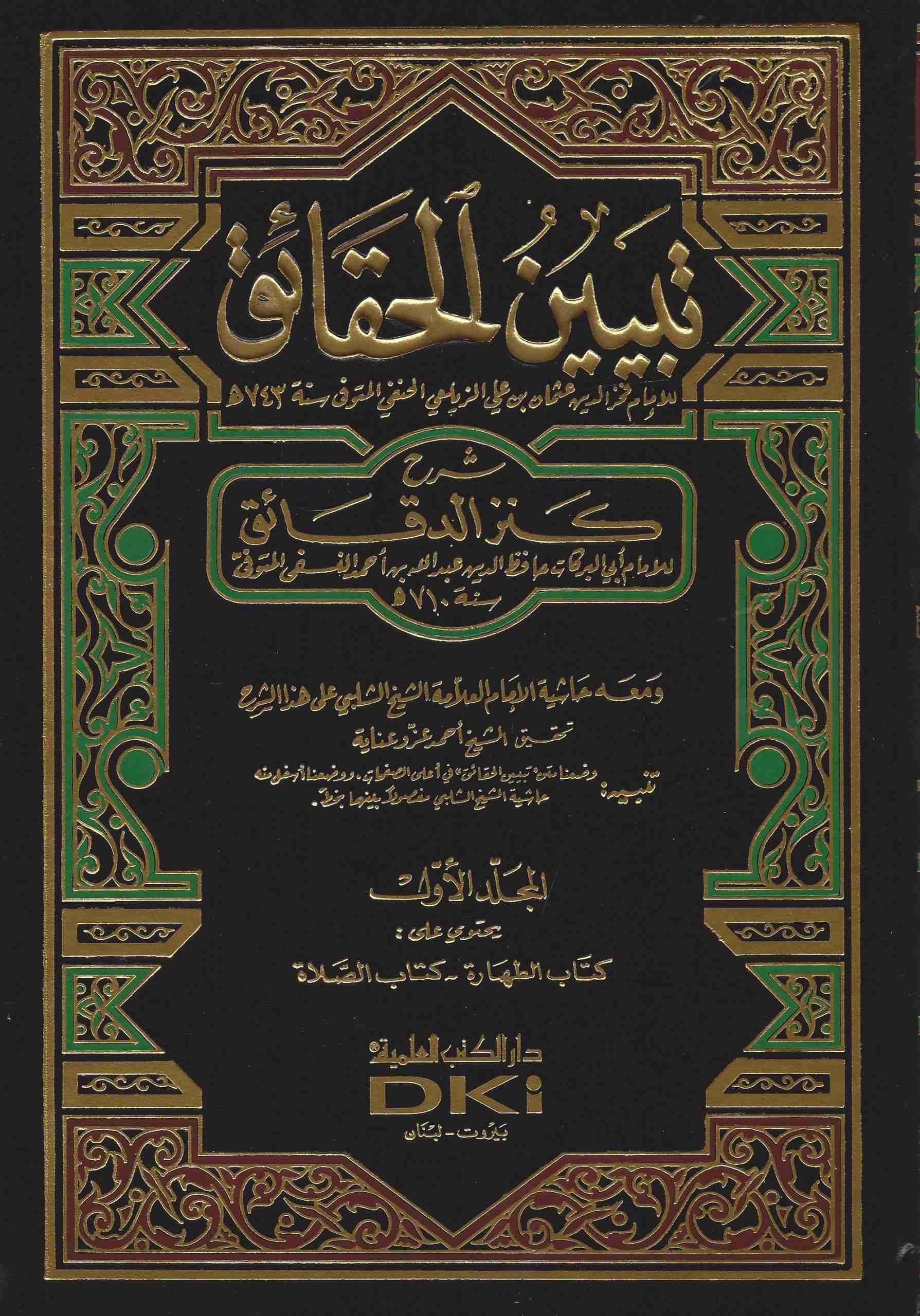
Tabyin al-Haqa'iq Sharh Kanz ad-Daqa'iq (The Clarification of Truths — Commentary on Kanz ad-Daqa'iq) — His absolute masterpiece. It is his commentary on the Kanz ad-Daqa'iq of Abu al-Barakat an-Nasafi (d. 710 H), which is one of the four fundamental mutun of Hanafi fiqh (along with al-Wiqaya, Majma' al-Bahrayn, and al-Mukhtar of Ibn Mawdud al-Mawsili). He commented on the book Kanz ad-Daqa'iq in several volumes; he excelled, was useful, verified, criticized, and corrected what needed to be adopted.
The Tabyin al-Haqa'iq is published in six volumes. It is often printed with the Hashiya ash-Shilbi of Shihab ad-Din Ahmad ibn Muhammad ibn Yunus ash-Shilbi (d. 1021 H), which is its principal and complementary commentary. This twin work — Tabyin al-Haqa'iq with Hashiyat ash-Shilbi — is a monument of Hanafi fiqh.
This commentary is distinguished by several qualities that have made its reputation:
- Clarity and precision in explaining legal questions
- Inclusion of proofs (dala'il) from the Quran and the Sunna
- Discussion of divergent positions within the madhhab
- Criticism and correction of weak positions
- Mastery of Arabic grammar and inheritance law
Tariqat al-Kalam 'ala Ahadith al-Ahkam — A work on the hadiths of legal rulings.
Sharh al-Jami' al-Kabir — A commentary on the Jami' al-Kabir of Muhammad ibn al-Hasan ash-Shaybani, the great disciple of Abu Hanifa.
His death: He died in Ramadan 743 H at the Khanqah of the Qarafa in Cairo and was buried there. To die in the blessed month of Ramadan, buried in the prestigious Qarafa cemetery of Cairo — what a blessed end. May Allah grant him His vast mercy and welcome him into Firdaws al-A'la.
His legacy: Sheikh al-Fakhr az-Zayla'i (may Allah have mercy on him) is one of the great commentators of the Hanafi madhhab during the Mamluk era. His Tabyin al-Haqa'iq is the reference commentary on the Kanz ad-Daqa'iq of an-Nasafi, one of the four most studied Hanafi mutun in the world. This work is still studied today in Hanafi madrasas from Cairo to Istanbul, from Damascus to Karachi and Deoband, training generations of fuqaha' and muftis. His journey — a scholar from the distant Somali coast to Cairo to enrich Islamic scholarship — illustrates the universal nature and the reach of classical Islamic civilization, where knowledge knew no geographic or ethnic borders. May Allah enable us to benefit from his scholarship and elevate his abode to the highest degrees of Paradise.