Ibn Rush al-Jadd
ابن رشد الجد
About the author
Full name: Abu al-Walid Muhammad ibn Ahmad ibn Ahmad ibn Rushd al-Qurtubi al-Maliki.
Birth and death: He was born in Cordoba in Shawwal 450 H (December 1058). He died on December 8, 1126 (520 H) in that same city, may Allah have mercy on him.
Why "al-Jadd"? He bears the surname al-Jadd ("the grandfather") to distinguish him from his grandson who bears the same name, Ibn Rushd al-Hafid ("the grandson"), the famous philosopher known in the West as Averroes (d. 595 H). It is essential not to confuse the two: the grandfather is a pure faqih, an imam of Maliki fiqh; the grandson is better known for philosophy. When the fuqaha' of the Maliki madhhab cite "Ibn Rushd," they designate the grandfather and no one else.
His place in the Umma: He was the most eminent Maliki jurist of his era in al-Andalus and the Maghreb. Alongside scholars such as Ibn 'Abd al-Barr, Abu al-Walid al-Baji, and his own grandson, he shaped the way the Maliki school is understood. Ibn Bashkuwal (d. 578 H) said of him: "People entrusted him with their most important affairs." His stature was such that some considered him a mujtahid. He is among the four great authorities (along with Ibn Yunus, al-Maziri, and al-Lakhmi) upon whom Imam Khalil ibn Ishaq relied in drafting his famous Mukhtasar.
His origins and education: He was born in Cordoba, then the intellectual capital of al-Andalus and one of the greatest cities of the Muslim world, into a family that would produce three generations of great judges and scholars. He began studying the Islamic sciences under the great scholars of his time, and his primary expertise lay in Maliki fiqh, a field in which he wrote abundantly.
His positions: He was the Grand Judge (Qadi al-Jama'a) of Cordoba and the khatib (preacher) of the Great Mosque of Cordoba. The Great Mosque of Cordoba was one of the most majestic places of worship in the Muslim world, and to be its imam and khatib testifies to his rank among scholars. Legal questions were sent to him directly by the Emir of the Murabitun (the Almoravids), the sovereign of al-Andalus and the Maghreb, making him the reference mufti of the entire Muslim West.
His students: Among his most illustrious students was the famous Qadi 'Iyad (may Allah have mercy on him) (476-544 H), the author of ash-Shifa' and the Tartib al-Madarik. The principal biographical sources on Ibn Rushd al-Jadd come from the catalogue of his professors (al-Ghunya) compiled by his student Qadi 'Iyad, as well as the Kitab as-Sila of Ibn Bashkuwal.
His character: In addition to being a judge, Ibn Rushd was known for his worship, and was a teacher renowned for his excellence in explaining difficult concepts. SubhanAllah, to combine the charge of Grand Judge of the greatest city of al-Andalus with devotion and patient teaching — this is the model of the complete scholar.
His works: His works are at the very heart of the edifice of late Maliki fiqh:
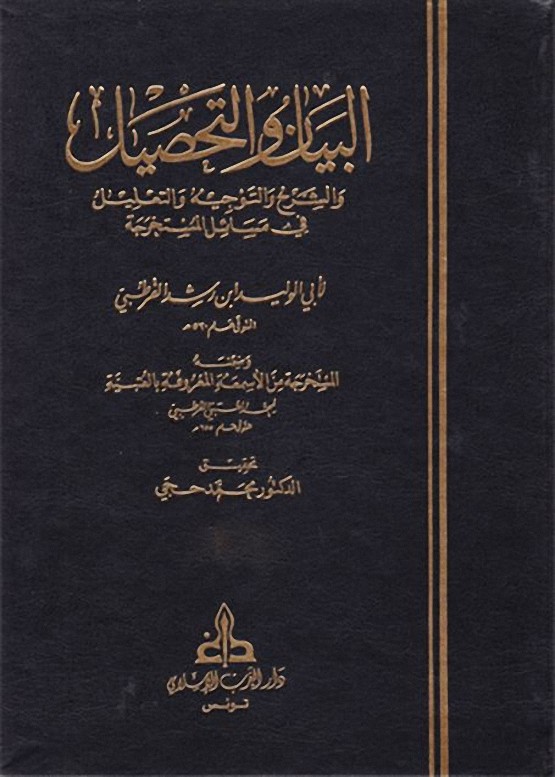
Al-Bayan wa at-Tahsil wa ash-Sharh wa at-Tawjih wa at-Ta'lil fi Masa'il al-Mustakhraja — His monumental masterpiece and one of the most famous works of all Maliki fiqh. It is a long and detailed commentary based on the Mustakhraja of Muhammad al-'Utbi al-Qurtubi — a famous Cordovan faqih. The Mustakhraja (also known as 'Utbiyya) is an anthology of legal questions compiled by al-'Utbi through listening sessions with the interpreters of Maliki doctrine. In this immense work, Ibn Rushd al-Jadd clarifies, explains, justifies, and analyzes the most complex questions of the madhhab. It is published in more than twenty volumes and remains indispensable for every researcher in Maliki fiqh.
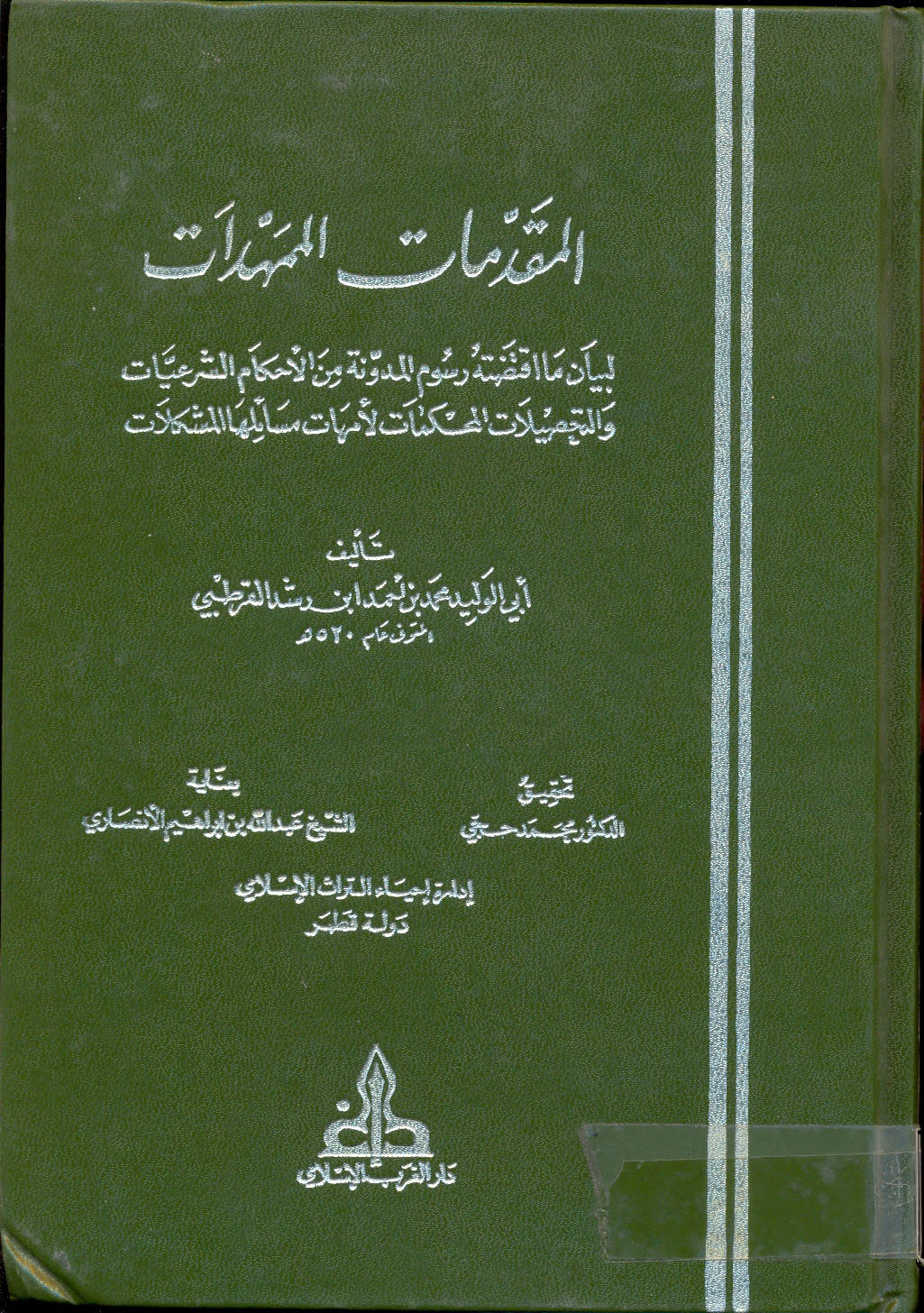
Al-Muqaddimat al-Mumahhidat — A famous treatise of Maliki jurisprudence, in which he lays the foundations and preliminary principles necessary for understanding Maliki fiqh. This book is considered an essential methodological introduction to the madhhab.
His Fatawa — Ibn Rushd al-Jadd was the reference mufti of the Muslim West under the Almoravids. His legal fatwas cover extremely varied fields — commercial law, family law, political affairs, questions of 'aqida — and reflect the complexity of Andalusian society of his time. Certain researchers have studied his fatwas addressed to the distant Maghreb, showing his role in the legal Islamization of Morocco under the Almoravids.
His historical context: Ibn Rushd al-Jadd lived under the Almoravid dynasty (al-Murabitun), a period of relative revival of Maliki fiqh in al-Andalus and the Maghreb. The Almoravids had given the Maliki madhhab an official status in their empire, and the Maliki fuqaha' enjoyed considerable influence. It is in this context that the fatwas and works of Ibn Rushd al-Jadd took on an immense legal and political scope.
His death: He died in 520 H in Cordoba. SubhanAllah, his grandson Ibn Rushd al-Hafid (the philosopher) was born in Cordoba in 520 H, approximately one month after the death of his grandfather — as if Allah had willed that the torch of scholarship in this family should never be extinguished. May Allah grant His vast mercy to Imam Ibn Rushd al-Jadd and welcome him into Firdaws al-A'la.
His legacy: Imam Ibn Rushd al-Jadd (may Allah have mercy on him) is one of the pillars of Maliki fiqh in the history of Islam. His Bayan wa at-Tahsil is an indispensable reference work without which no advanced student of the Maliki madhhab can do. His influence on Imam Khalil — whose Mukhtasar became the base text of the Maliki school — testifies to the depth and permanence of his contribution. And his family — three generations of judges and scholars, from grandfather to grandson — illustrates the beauty of the transmission of knowledge in Islam. May Allah enable us to benefit from his scholarship.